Case Study: Streamlining Agency Links for Growth
Ready to get started?
Join thousands of users who are already using our platform to manage their links efficiently.
Create Your Free AccountThe Scenario: When Growth Turns into Operational Chaos
Picture this: a bustling digital marketing agency, let's call them "Apex Digital." Just three years ago, they kicked things off with two passionate partners and a small roster of local clients. They were quick, innovative, and always delivered fantastic results. Fast forward to today, and Apex is a different beast entirely. They've blossomed into a team of 25 employees, managing over 60 active clients – everything from slick e-commerce brands to complex SaaS companies. We're talking thousands of daily touchpoints across email campaigns, social media, and paid ads, week after week.
On the surface, everything looks incredibly successful. Revenue is climbing, and their client list is seriously impressive. But peel back the layers, and you'd find their operations team utterly swamped. The sheer volume of ongoing campaigns means countless URLs are floating around in the digital ether. Links get tossed into spreadsheets, Slack channels, and Trello cards without any real system or oversight. It's a recipe for disaster, and it was brewing right under their noses.
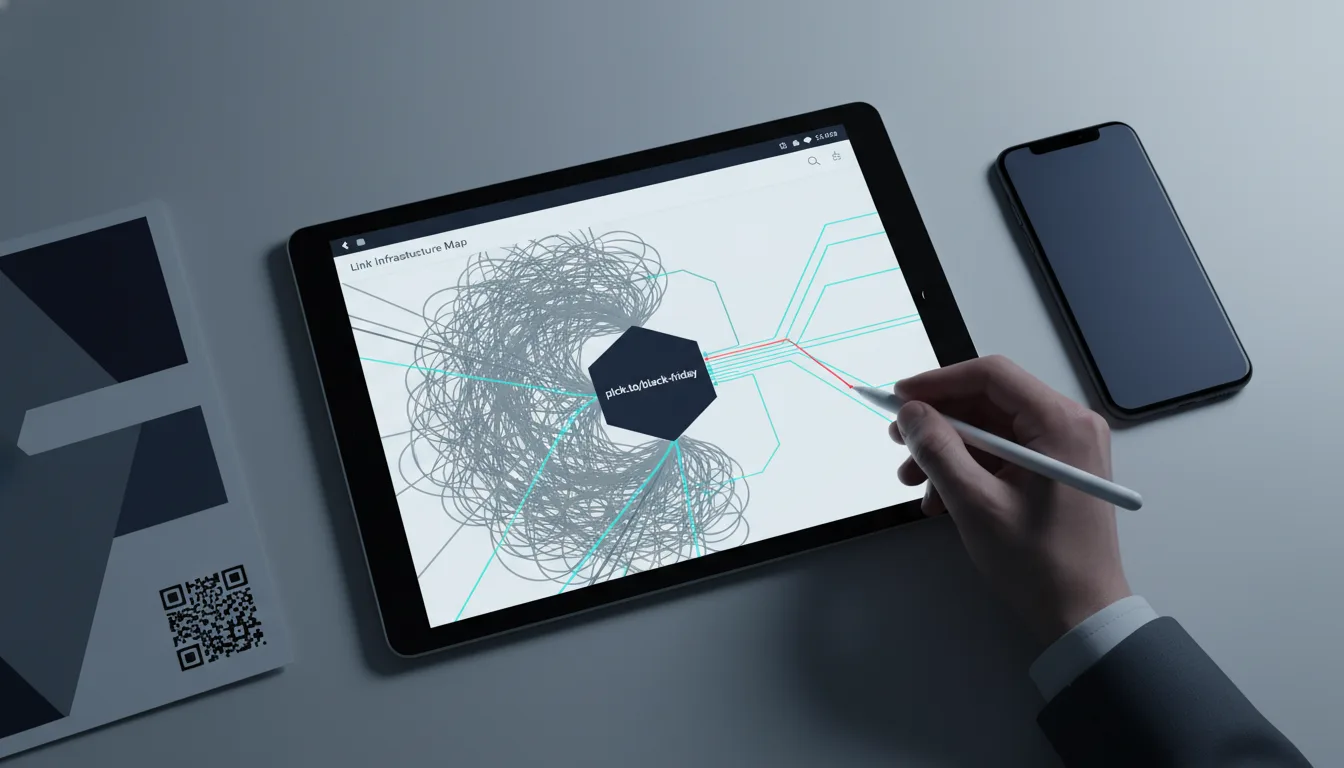
The breaking point hit hard during a high-stakes Black Friday launch for one of their biggest retail clients. Imagine the panic: a crucial tracking link in a massive email blast went out, and it was completely wrong. Instead of landing on the shiny new product page, customers were greeted with a dreaded 404 error. And because this link was hard-coded, not managed through a dynamic shortener, there was absolutely no way to fix it once the email was sent. The result? A significant loss of revenue for the client and a huge blow to Apex Digital's hard-earned credibility. Ouch.
For agencies, a URL isn't just a web address; it's a critical data point, a valuable brand asset, and a significant liability if not managed correctly. As your agency scales, relying on ad-hoc link creation quickly becomes a massive operational risk.
This case study dives deep into how Apex Digital pulled themselves out of the chaotic world of manual link handling and transformed their approach into a streamlined, centralized link management architecture. They didn't just fix a problem; they turned a major vulnerability into a powerful competitive advantage. Want to know how they did it? Let's dig in.
The Challenge: Battling the Beast of "Link Sprawl"
Before Apex Digital could even think about a solution, they first had to get real about the symptoms stifling their growth. The problems weren't just about that one broken Black Friday email; they were much deeper, stemming from a condition we like to call "Link Sprawl." It's that moment when your digital assets—especially links—multiply faster than your ability to effectively manage them. Sound familiar?
1. The Attribution Black Hole: Where Did That Click Come From?
Apex was struggling to prove actual ROI for their clients. They *were* using UTM parameters, which is a good start, but the consistency simply wasn't there. One account manager might use utm_source=facebook while another opted for utm_source=fb. Can you imagine the mess this created in Google Analytics? Reporting became an absolute nightmare, making it nearly impossible to get a clear, unified view of campaign performance. Plus, when links were shared on "Dark Social" channels like SMS, WhatsApp, or internal Slack, they had zero visibility into click-through rates. It was like shouting into a void and hoping someone heard you.
2. Brand Inconsistency: Eroding Trust, One Link at a Time
The agency found itself relying on a hodgepodge of generic, free URL shorteners for client campaigns. Think about it: sending a premium client's customers to a link that looked like generic-shortener.com/x9z7q immediately eroded trust. It just screamed "spammy" and, predictably, led to lower Click-Through Rates (CTR). Clients started asking why their brand name wasn't visible in the links, and Apex didn't have a compelling, easy answer. Every unbranded link was a missed opportunity to reinforce their clients' identity.
3. The Editing Paralysis: Once It's Live, It's Set in Stone
As we saw with that Black Friday mishap, once a static link was deployed—whether in a PDF, a printed QR code, or an email—it was essentially set in stone. If a landing page URL changed (a super common occurrence in the fast-paced world of e-commerce), those old links simply died. Imagine having thousands of perfectly good marketing materials suddenly become useless! The agency desperately needed the ability to use Dynamic Links, which would allow them to redirect traffic on the fly without ever changing the customer-facing URL. Without this, they were constantly fighting fires and losing valuable traffic.
"We realized we weren't just managing links; we were managing client trust. Every broken link was a micro-breach of that trust, chipping away at our reputation."
— Operations Director, Apex Digital
The Solution Approach: Embracing Centralized Link Management
Enough was enough. The team at Apex Digital made a definitive decision: they needed to completely overhaul their link infrastructure. Their goal wasn't just to "shorten links" for convenience; it was about implementing a robust governance strategy that controlled how every bit of value traveled from a user's click to its final destination. It was about creating order from the chaos.
After careful consideration, they chose to implement a professional link management platform, specifically Planck.to, to centralize all control. This strategic shift was built upon three foundational pillars:
- Standardization: This meant enforcing strict naming conventions and creating predefined UTM presets across the board. No more "facebook" vs. "fb"!
- Branding: A commitment to moving all client campaigns to custom branded domains. Think planck.to/clientname – professional, memorable, and trust-inspiring.
- Agility: The absolute assurance that every single link deployed would be dynamic and easily editable, no matter where it lived.
Implementation: The Agency's Transformation Journey
The transition from a state of "Link Sprawl" chaos to well-ordered harmony wasn't instant, but it was remarkably efficient, taking roughly four weeks. Here’s a practical, step-by-step breakdown of how Apex Digital implemented their shiny new system and turned things around.
Step 1: Smart Workspace Segmentation for Client Clarity
For any agency handling multiple clients, mixing data is a recipe for errors and headaches. Apex understood this deeply. So, their first move was to set up distinct workspaces for each major client within their chosen platform. This simple yet powerful segmentation ensured that the fashion retail team, for instance, wouldn't accidentally tweak a link belonging to a B2B software client. It created clear boundaries and streamlined workflows, significantly reducing the risk of costly mistakes.
Step 2: Branded Domain Integration – A Game Changer for Trust
This was arguably Apex's highest-leverage move. Instead of blasting out long, unwieldy, or generic-looking URLs, they configured custom branded aliases for every client. For a summer campaign, imagine the difference: instead of a clunky, 150-character string, the link became something clean and memorable like:
planck.to/summer-sale-vip
This immediate improvement in aesthetics not only made social posts look more professional but also made the links incredibly easy to remember for offline media like radio spots and billboards. It was a subtle change with massive impact on brand perception and user trust.
When you're setting up branded links for your clients, consider using a subdomain of their main URL (like links.client.com) or even a catchy vanity domain that acts as a call to action. This small detail powerfully reinforces brand equity with every single click.
Step 3: The QR Code Renaissance – Dynamic Power for "Phygital"
Apex Digital handles a substantial amount of "phygital" marketing – that's the blend of physical and digital, like QR codes on flyers. Previously, they relied on static QR code generators. This meant if a print run of 10,000 flyers had a broken link embedded, all those flyers were instantly useless, headed straight for the trash. By switching to dynamic QR codes generated through Planck.to, they gained an incredible superpower: the ability to change the destination URL *even after* the flyers were printed and distributed. This single change saved them potentially thousands in re-printing costs and countless hours of frantic damage control.
Step 4: Standardized UTM Building – Goodbye Messy Data!
Remember that "Attribution Black Hole"? Apex tackled it head-on. The team completely stopped manually typing out UTM parameters. Instead, they leveraged the link manager's built-in UTM builder. This genius feature forced users to select "Source" and "Medium" from predefined drop-down menus, instantly eliminating discrepancies like "facebook," "Facebook," and "fb." The result? Data hygiene improved dramatically and instantly, giving them reliable, consistent data to work with.
The Results: Measurable Growth and Reclaimed Sanity
Just three months after fully integrating this comprehensive link management strategy, Apex Digital conducted a thorough audit of their performance. The results weren't just anecdotal; they were quantifiable, directly impacting both their clients' bottom lines and their own operational efficiency. It was a resounding success.
The agency proudly reported a staggering 34% increase in Click-Through Rates (CTR) on social media campaigns. The secret? Simply switching from generic, unbranded links to custom, branded ones. That's the power of trust and professionalism!
But the benefits didn't stop at CTRs. Here's what else Apex Digital experienced:
- Operational Time Saved: Their reporting team saw a dramatic improvement, saving approximately 5 hours per week. This time was previously wasted cleaning up messy data, deciphering broken tracking codes, and generally pulling their hair out. Now, they can focus on actual analysis!
- Client Retention: One of their major clients explicitly highlighted "improved reporting transparency" as a key reason for confidently renewing their annual contract. This speaks volumes about the impact of reliable data.
- Campaign Recovery: During an unexpected server outage, the team successfully redirected a live link mid-campaign, saving a critical PPC campaign that was spending a hefty $2,000/day. Imagine the alternative – thousands lost, trust broken.
How to Apply This to Your Agency (Before Crisis Strikes!)
If you're running an agency or even managing marketing for a large organization, here's the crucial takeaway: you absolutely don't need to wait for a full-blown crisis, like Apex Digital's Black Friday fiasco, to upgrade your link infrastructure. Proactive is always better than reactive! Below is a practical, actionable workflow to help you replicate Apex Digital's success using powerful tools like Planck.to.
1. Audit Your Current Links: Where Are Your Gaps?
Start with a simple but revealing exercise. Take a good, hard look at your existing links. Check your social media bios, delve into your email signatures, and revisit those evergreen blog posts. Are they generic? Are they tracking clicks effectively? If you spot a mix of raw, long URLs (e.g., client.com/products/category/id=123) or inconsistent shorteners, then congratulations – you've just found immediate, significant room for optimization. Identify where the messiest spots are and prioritize them.
2. Establish a Clear Naming Convention: Consistency is King
Before you even think about shortening another link, get your team on the same page. Agree on a consistent naming format for all your links. A solid convention could be DATE-CAMPAIGN-CHANNEL. For example: planck.to/nov24-blackfriday-ig. This might seem like a small detail, but trust me, it makes searching for specific links in your dashboard incredibly fast and efficient down the line. No more guessing games!
3. Secure Short, Branded Domains: Professionalism Pays Off
This is a no-brainer for boosting brand trust. Purchase a short version of your agency's domain for internal sharing and, crucially, encourage your clients to invest in vanity URLs for their campaigns. It's usually a very small expense (often under $15/year!), but it adds an immense layer of professionalism and brand reinforcement to every single interaction your links are involved in. It tells your audience you're serious about your brand.
4. Utilize "Bio Link" Pages: Own Your Social Traffic
Agencies often grapple with the frustrating "link in bio" limitation on popular platforms like Instagram. Instead of resorting to generic third-party tools that can distract from the client's brand and siphon off your precious data, build a custom, branded bio page. For instance, you could use planck.to/brand-menu to host a curated list of destinations. The best part? This strategy keeps all the valuable traffic data firmly in your control, rather than handing it over to a third party. It’s smart, strategic, and brand-centric.
Centralizing your link management isn't just about efficiency; it drastically improves team onboarding. New employees don't need to learn five different, convoluted ways to post a link. Instead, they learn one cohesive system that automatically handles shortening, QR code generation, and tracking – making them productive faster.
Conclusion: Links Aren't Just Links, They're Digital Infrastructure
The compelling story of Apex Digital underscores a fundamental truth about modern digital marketing: your operational backbone dictates your ultimate success. You can boast the most creative team in the world, churn out groundbreaking campaigns, and have unparalleled strategic insights. But if your delivery mechanism – those crucial links – are broken, unbranded, or untrackable, then, frankly, you're leaving a lot of money, and a lot of client trust, on the table. It's that simple.
By treating URL management not as a tiresome afterthought, but as a core part of their digital infrastructure, Apex Digital managed to drastically reduce errors, significantly improve client trust and transparency, and gain a crystal-clear picture of what was actually working across all their campaigns. The shift from chaotic, manual spreadsheets to a sophisticated platform like Planck.to wasn't just a software upgrade for them; it was a pivotal maturity milestone for a rapidly growing agency, cementing their position as industry leaders.
So, what's your next move? Don't wait for your own Black Friday crisis. Start small, just like Apex did. Take the time to audit your current campaigns, secure those valuable branded domains, and begin tracking the invaluable data that might currently be slipping through the cracks. Your future self, your operations team, and most importantly, your clients, will undoubtedly thank you for it.
Ready to get started?
Join thousands of users who are already using our platform to manage their links efficiently.
Create Your Free Account