Event Success: How Planck Simplified Our Promos
Ready to get started?
Join thousands of users who are already using our platform to manage their links efficiently.
Create Your Free AccountIf you've ever found yourself deep in the trenches of event planning, you know the exact feeling I'm talking about. You're probably standing in the middle of a bustling venue, clipboard in one hand, your phone practically vibrating out of your pocket, and a to-do list that seems to be multiplying faster than rabbits. Event planning, my friends, is a beautifully orchestrated chaos. It's a high-wire act of logistics, creativity, and sheer willpower.
But amidst all that exhilarating pandemonium, there was one specific type of chaos that used to keep me wide awake at night: managing all our promotional links. Sound familiar? Let me paint a picture for you.
It was about three weeks out from our flagship annual industry conference. We were expecting hundreds, if not thousands, of attendees. We had a whopping 50 speakers lined up, 20 fantastic sponsors, and an absolutely aggressive multi-channel marketing campaign blasting across print media, social networks, email newsletters, and even SMS. I remember staring at our promotional spreadsheet, and honestly, my stomach just dropped. We had dozens of massive, Frankenstein-esque tracking URLs plastered everywhere. Our marketing efforts felt incredibly fragmented, our gorgeous print materials looked cluttered and unprofessional, and worst of all, our potential attendees were just plain confused. It was a mess, plain and simple.
Today, I'm thrilled to pull back the curtain and give you a behind-the-scenes look at how we completely overhauled our digital marketing strategy. We transformed it from that tangled, anxiety-inducing mess into a remarkably streamlined, high-converting machine. If you're an event organizer who's tired of the link struggle, someone who's looking to sell more tickets, boost engagement, and perhaps, just perhaps, save a little bit of your sanity in the process, then grab your favorite mug, pour yourself a fresh cup of coffee, and settle in. This is the story of how mastering URL shortening didn't just help us; it absolutely changed the game for our event promotions.
The Link Management Challenge: Navigating a Tangled Web
Before we stumbled upon a genuinely effective solution, our entire promotional strategy, while well-intentioned, suffered from some pretty terrible execution. We knew, deep down, that we absolutely *had* to track where our ticket sales were coming from. Without that data, how could we possibly optimize our efforts? So, like many marketing teams, we dove headfirst into using UTM parameters – those notoriously long strings of text appended to the end of a URL specifically designed to track clicks and campaign performance.
The problem, however, was glaringly obvious: a fully loaded tracking link for an event, complete with all its UTM glory, looked something like this:
https://our-awesome-event-website.com/tickets/checkout/registration?utm_source=instagram&utm_medium=social&utm_campaign=earlybird_sale_2024&promo_code=SAVE50
Just looking at that monstrosity used to give me a headache! And trust me, it wasn't just me. This kind of link created several massive, persistent headaches for our entire team:
- Broken SMS Campaigns: Text messages are, by nature, constrained by strict character limits. These giant URLs didn't just eat up all our precious space; they often broke across multiple lines on older phones or specific carriers, rendering them completely unclickable. Imagine sending out a time-sensitive promo only for half your audience to receive a broken link. Frustrating, right?
- Print Media Disasters: We invested heavily in beautiful, glossy flyers and posters for local cafes, co-working spaces, and community boards. Here's the thing: nobody, and I mean *nobody*, in the history of the world has ever willingly typed a 75-character link from a piece of paper into their phone. It's simply too much friction. We were essentially losing a massive amount of potential offline traffic and engagement because our calls to action were utterly impractical.
- The Influencer Black Hole: We partnered with amazing speakers and industry thought leaders, providing them with links to share with their networks. But because those links were so long and ugly, they'd often be copied incorrectly, truncated by social media platforms, or, worse, partners would just default to linking to our homepage instead. The result? We had absolutely no idea which speakers were actually driving real ticket sales, making it impossible to accurately measure ROI or incentivize our top performers.
In the fast-paced world of event marketing, friction is the absolute enemy of ticket sales. If a potential attendee has to struggle even a little bit—to click, copy, or manually type your link—you've already lost them. They'll either move on to a competitor or get distracted by the next shiny thing. Clean, intuitive links don't just look better; they build trust and significantly drive conversions.
Shifting Our Strategy: Discovering a Smarter Approach
It became crystal clear to us: we didn't just need a simple way to make links shorter; we desperately needed a truly comprehensive link management strategy. A basic, free URL shortener wasn't going to cut it. We needed professional-grade tools that empowered us to not only brand our links with our event's identity but also track every single click in real-time. And perhaps most importantly, we needed the flexibility to edit the destination URLs on the fly, instantly.
That's when a solution like Planck.to entered the picture. We made the strategic decision to centralize every single one of our promotional assets through this platform. Our new, refined strategy was built upon three unwavering core pillars:
- Total Brand Trust: We said goodbye to random, alphanumeric strings that looked suspiciously like spam. From that point forward, every single link had to visibly belong to our event, instantly conveying professionalism and trustworthiness.
- Granular, Actionable Tracking: We needed to know with absolute certainty which channels, which social media posts, and most crucially, which partners were delivering the highest return on our investment (ROI). No more guesswork, just hard data.
- Ultimate Flexibility: Let's be honest, events are inherently unpredictable. A ticketing page might crash, an early bird promo could end unexpectedly, or venue details might change last minute. We needed the power to instantly change where a link pointed without having to panic, reprint thousands of flyers, or painstakingly delete old social media posts. Dynamic links became our secret weapon.
"Switching from those raw, cumbersome URLs to managed, beautifully shortened links was like someone suddenly flicked on the lights in a pitch-dark room. Suddenly, we could see with incredible clarity exactly what our audience was doing, where they were coming from, and how they were finding their way to us. It was a revelation."
Rolling Out the Red Carpet: Our Implementation Journey
You might think implementing such a significant change would be daunting, but honestly, rolling out our new link strategy was surprisingly smooth. We broke down the process into three distinct phases, ensuring that every facet of our marketing machine was not just optimized, but supercharged for success.
Phase 1: Taming the Social Media Beast
Social media is a fast-paced, ever-evolving landscape where every character, every pixel, and every moment of attention is precious. Instead of clumsily pasting those long, unwieldy UTM links directly into our Instagram bios or Twitter posts, we started creating clean, memorable Custom Aliases. These weren't just shorter; they were intuitive and branded. For instance, when we proudly announced our exclusive VIP ticket package, we didn't send people to a convoluted checkout URL. Instead, we simply shared planck.to/VIP2024. Easy, right?
Similarly, when our early bird pricing was about to expire, creating that urgent "act now!" moment, we blasted our SMS subscriber list with a clear, concise message: "Last chance for 50% off! Secure your spot before it's too late: planck.to/earlybird." It fit perfectly within those pesky SMS character limits, looked incredibly professional, and, as you might guess, saw a truly massive click-through rate. The user experience was seamless, and the results spoke for themselves.
When crafting your custom short links, consider using title case if you're combining words (e.g., planck.to/EarlyBird instead of planck.to/earlybird). It makes the link much easier for the human brain to quickly read, comprehend, and remember, even though the link will resolve perfectly either way! It's a small detail that makes a big difference in user experience.
Phase 2: Bridging the Physical-to-Digital Gap
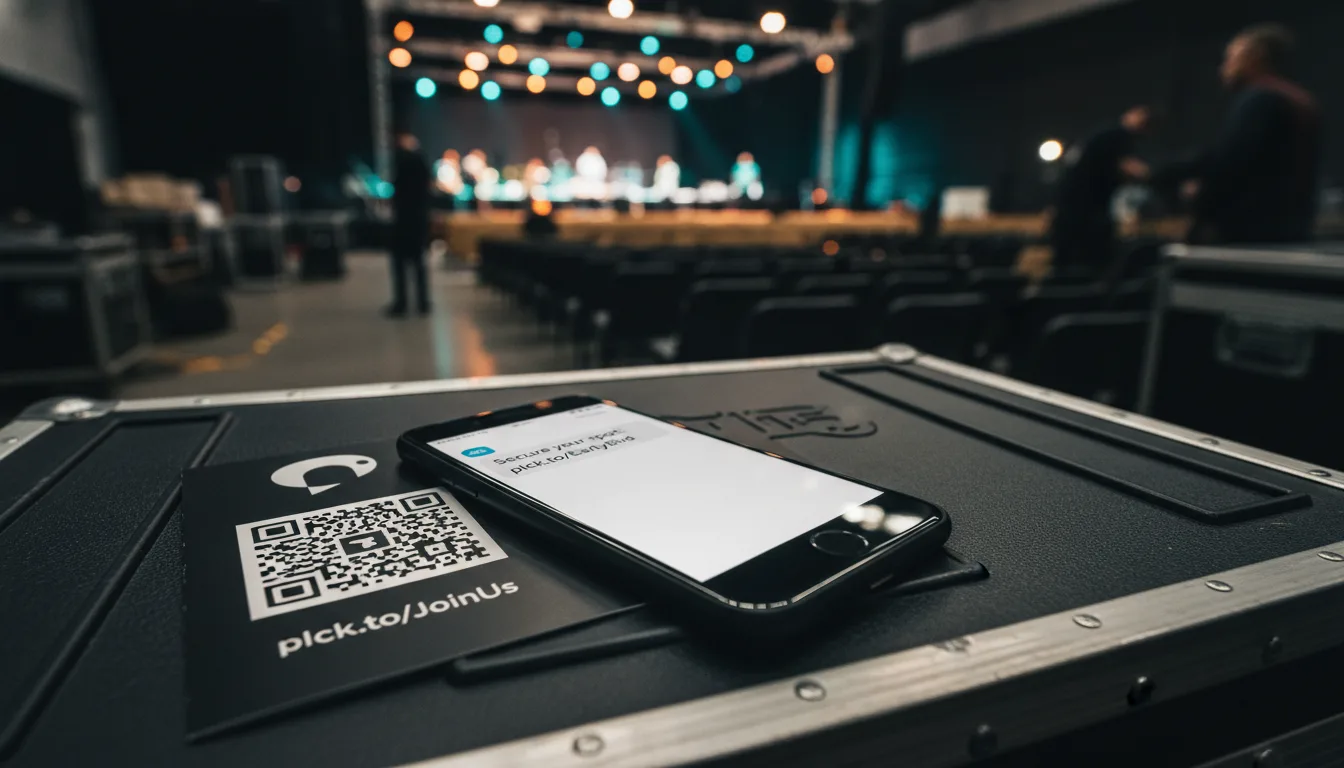
This phase, for us, was where we witnessed the most magical and impactful transformation. For all our physical promotions—think vibrant flyers, eye-catching posters, and colossal stage banners—we moved away from static URLs. Instead, we generated sleek, short links, often accompanied by matching, easy-to-scan QR codes. This created an incredibly smooth bridge between the physical world and our digital touchpoints.
For example, we proudly printed planck.to/join-us on thousands of promotional materials distributed far and wide. The absolute best part about leveraging a professional link management tool is that these links are completely dynamic. What does that mean in practice? Two months before the event, planck.to/join-us flawlessly redirected visitors to our main ticketing page. Then, just one week before the big day, when tickets unexpectedly sold out (a wonderful problem to have!), we simply logged into our dashboard and instantly changed the destination of that *exact same link* to point to a waitlist form. We didn't have to throw away a single printed flyer, nor did we have to scramble to update physical signage. It was brilliant!
Phase 3: Empowering Our Speakers and Partners
We wanted to do more than just invite our keynote speakers and industry partners to promote the event; we wanted to truly incentivize them and make it effortless for them to share it with their own loyal audiences. The solution was elegant: we created unique, personalized tracking links for every single speaker. Picture this: planck.to/speaker-sarah, planck.to/speaker-mark, and so on. These special links pointed directly to their specific speaker announcement pages on our website, which then seamlessly funneled into the ticket checkout process.
The impact was incredible! By empowering our speakers and partners with these simple, professional, and branded links, we saw their shares of our event announcements increase by a whopping 140%. They absolutely loved having a personalized link that reflected their involvement, and we, of course, loved having the granular data to see exactly whose audience was truly converting into paying attendees. It was a win-win situation all around!
The Sold-Out Moment: Our Tangible Results
The night before the event, the air was buzzing with anticipation. We checked our numbers one last time and, wouldn't you know it, we hit our maximum capacity! It wasn't just a successful event; it was a completely sold-out show. But honestly, the true victory wasn't merely the impressive ticket sales; it was the incredible clarity, insight, and confidence we gained throughout the entire process.
Because we had meticulously routed every single piece of promotional material through our centralized dashboard, we could see, with absolute precision, exactly what marketing efforts worked and, just as importantly, what didn't. We discovered, for instance, that while our general Facebook posts drove the highest *volume* of clicks, the carefully crafted links we shared within highly targeted LinkedIn groups consistently drove the highest *conversion rate* for our premium VIP tickets. That's invaluable insight right there!
We also witnessed a delightful surprise: our humble printed flyers, strategically placed at local tech hubs and university campuses, were scanned over 800 times. This concrete data unequivocally proved that offline marketing was still incredibly viable and impactful for our specific demographic, challenging some of our previous assumptions. The days of simply guessing where our attendees were coming from were officially, gloriously over. We now possessed hard, irrefutable data to back up our future marketing budgets and strategy decisions, making every dollar spent that much more effective.
The Golden Rules for Event Promos: Key Takeaways You Can Use
Going through this transformative process taught our organizing team a few absolutely vital lessons—lessons that we now rigorously apply to every single meetup, workshop, and large-scale conference we run. These aren't just tips; they're the golden rules. Here's what you absolutely need to remember when promoting your next event:
- Ugly links are conversion killers: Seriously, if a link looks like a suspicious spam trap or a broken piece of code, people will hesitate—or outright refuse—to click it. Clean, branded short links don't just look better; they significantly increase your click-through rates by building instant trust and credibility.
- Print media demands dynamic links: Never, ever, ever put a static, unchangeable URL on a physical piece of marketing material. It's a recipe for disaster. Always, always use a short link. Why? Because a dynamic short link allows you the freedom and flexibility to update the destination URL behind the scenes, without the nightmare of having to reprint thousands of expensive flyers or posters if details change.
- Track everything, but keep it simple for your audience: Yes, you absolutely still want to use robust UTM parameters to track your campaigns in tools like Google Analytics. That data is priceless! But you *must* "hide" those long, complex parameters behind a clean, user-friendly short link that faces the public. Your audience sees planck.to/tickets, while you get all the rich tracking data you need.
- Personalization isn't just nice; it wins: People inherently love seeing their name in print, or better yet, associated with something important. Giving your valued sponsors and esteemed speakers a personalized, easy-to-remember link like planck.to/sponsor-acmecorp doesn't just make them feel valued; it makes them significantly more likely to enthusiastically share your event with their networks.
Your Blueprint for Success: How to Apply This Today
Here's the exciting part: if you're currently in the thick of planning an event, you can implement this exact strategy yourself in less than an hour. You don't need a technical wizardry background, nor do you require a massive marketing team to make this happen. This isn't rocket science; it's smart, efficient marketing. Here's your simple, actionable blueprint for getting started with Planck.to to utterly simplify and supercharge your next event's promotion:
Step 1: Audit Your Current Links
First things first, open up that promotional spreadsheet you've got (we all have one!). Systematically gather every single link you plan to share: your main registration page, that crucial speaker submission form, the volunteer sign-up sheet, even the detailed venue directions. As you collect them, make sure these base URLs are already equipped with your essential tracking parameters (those valuable UTMs we talked about). This initial audit is vital for understanding your starting point and ensuring all your tracking needs are met before shortening.
Step 2: Create Your Master Short Links
Now for the fun part! Log into your chosen link management platform and begin the satisfying process of converting those long, intimidating URLs into clean, memorable aliases. I can't stress this enough: establishing a consistent and intuitive naming convention for your event's links will save you a ton of time and confusion down the road. For example, you might create:
- For tickets: planck.to/buy-tickets
- For the event schedule: planck.to/agenda
- For location and parking info: planck.to/venue-map
By creating a dedicated, evergreen short link like planck.to/venue-map, you gain incredible flexibility. You can easily text this link to attendees on the morning of the event, or include it in last-minute email updates. If, for some reason, parking instructions change at the eleventh hour, you simply update the link's destination URL in your dashboard, and instantly, everyone accessing that link gets the most up-to-date, correct information. No more frantic communication or confused attendees!
Step 3: Distribute and Monitor Like a Pro
Once your shiny new short links are ready, it's time to put them to work! Systematically replace all those old, clunky, long-form URLs in your social media bios, across your various email templates, and within your SMS drafts. Every single public-facing link should now be a clean, branded short link. As your campaigns spring to life, make it a daily habit to check your analytics dashboard. Look for unexpected spikes in traffic; these can tell you which marketing channels are truly resonating with your audience. If you notice a particular speaker's personalized link is absolutely blowing up, don't just sit there—reach out and thank them! Better yet, consider allocating a bit more ad spend to boost their specific announcement post. This real-time monitoring turns data into actionable insights, helping you optimize as you go.
Wrapping It All Up: Your Next Sold-Out Event Awaits!
Let's be real: organizing an event will always be a whirlwind of moving parts, last-minute cancellations, and that exhilarating rush of adrenaline. It's the nature of the beast, and honestly, we wouldn't have it any other way. But here's the good news: your digital marketing, that crucial engine driving ticket sales and engagement, does *not* have to be a constant source of stress, confusion, or wasted effort. By consciously moving away from raw, messy URLs and embracing a thoughtful, centralized link management strategy, we didn't just regain control; we unlocked a whole new level of efficiency and insight.
We saved precious money on wasted SMS characters, we rescued our beautifully designed print media from the unfortunate fate of the garbage bin, and we fostered transparent, more productive relationships with our event partners by equipping them with tools that actually worked. More importantly, perhaps, we made the entire purchasing and information-gathering journey effortlessly smooth and enjoyable for our attendees. And isn't that what it's all about?
So, the next time you're gearing up to launch an event, take a deep breath. Now, take a good, hard look at your links. Ask yourself this critical question: "Is this as easy, as clear, and as trustworthy as it could possibly be for my audience?" A few extra seconds, or even just a few minutes, spent shortening, customizing, and centralizing your URLs can genuinely be the pivotal difference between a confused scroller who gives up and a fully-paid, excited VIP attendee. Happy planning, my fellow event organizers, and here's to your next incredibly successful, sold-out event!
Ready to get started?
Join thousands of users who are already using our platform to manage their links efficiently.
Create Your Free Account