Networking Success: Planck Digital Cards Educate & Connect
Ready to get started?
Join thousands of users who are already using our platform to manage their links efficiently.
Create Your Free AccountThe Networking Conundrum: Are You Still Using Yesterday's Tools for Tomorrow's Connections?
Alright, let's set the scene. You're at a buzzing industry conference, right? The energy is electric, the conversations are flowing, and you've just nailed an elevator pitch with a high-value prospect. You're an educational consultant, and your real superpower isn't just your job title; it's the treasure trove of comprehensive digital courses, insightful whitepapers, and dynamic training programs you've meticulously crafted online. Your value is deep, nuanced, and frankly, digital.
They're hooked. They want more. So, what's your next move? If you're like many, your hand instinctively reaches for that traditional paper business card. It's got your name, email, and a generic website address. As you hand it over, a tiny alarm bell goes off. You're asking this busy professional to go home, fire up their laptop, manually type in a potentially lengthy URL, wade through your website's navigation, and *hope* they stumble upon that exact educational case study you just spent three minutes passionately talking about. Does that sound like a recipe for success?
In today's digital-first world, a truly successful networking interaction *must* seamlessly bridge the gap between an offline conversation and a guided online educational journey. Relying on passive, unmanaged links is like dropping your precious information into a black hole – you're guaranteed a massive drop-off in post-event engagement.
This isn't just a hypothetical scenario; it's playing out thousands of times every single day. Professionals are trying to share complex, incredibly valuable digital assets using methods that, frankly, belong in another decade. What's the fallout? Missed connections, lost opportunities, and absolutely zero visibility into whether your networking efforts are actually making a difference. But here's the good news: this story doesn't have to end there. This is where intelligent URL shortening and robust link management step in, transforming a simple introduction into a powerful, trackable, and deeply educational journey.
The Glaring Problem: Why Analog Networking Just Doesn't Cut It Anymore
The "Lost in Translation" Trap
Think about it: when you're excitedly sharing a specific resource during a networking event, that URL is almost never a pretty, simple address. A direct link to that exclusive educational webinar or that must-have training module often looks like a jumbled string of random characters, confusing query parameters, and fleeting session IDs. Seriously, are we expecting a brand-new contact to manually type that monstrous thing out? That's a surefire recipe for them to give up before they even start. And even if you promise to email them the link later, how often do those emails get buried under the avalanche of other messages they received during a busy conference?
The "Follow-Up Black Hole"
Perhaps the most frustrating aspect of traditional networking is what I call the Data Black Hole. You've handed out fifty paper business cards, or maybe just given out your generic website domain. Now what? You have absolutely no clue what happens next. Did they actually visit your site? Were they interested enough to check out your services page? Did they download that educational brochure you mentioned? Without smart link management, you're flying completely blind. Your follow-ups become generic guesses, feeling more like cold outreach than a warm, context-driven continuation of an earlier conversation. It's frustrating, isn't it?
If you can't measure an interaction, you can't improve it. Making the switch to managed, trackable short URLs for your key networking assets isn't just a good idea; it's the essential first step toward building relationships based on real data, not just guesswork.
The Game-Changer: Bridging the Gap with Smart Link Management
Welcome to the Digital Link Ecosystem
So, how do we fix this glaring disconnect between those valuable offline introductions and a smooth online educational journey? The answer lies in crafting a curated, intentional digital entry point. Forget sharing a raw, unwieldy website address that looks like a technical error. Savvy professionals today are leveraging powerful link management platforms like Planck.to to create a centralized digital business card or a "link in bio" style page. This isn't just any page; it's a targeted educational hub, designed to house *precisely* what a new connection needs to see. We're talking about an engaging introduction video, direct links to your flagship articles, a compelling portfolio of your best work, and of course, a super easy way to schedule a meeting with you.
Custom Short URLs: The Invisible Glue
The real magic behind this entire digital hub strategy? It's the Custom Short URL. These little powerhouses serve two absolutely critical purposes. First, they're human-readable, memorable, and just plain elegant. No more trying to decipher a jumbled mess. Second, and this is where it gets really exciting, they act as an invisible tracking pixel. When someone scans your QR code or types in one of your custom short links, the link management system instantly goes to work. It records the click, tells you the device type, pinpoints the location, and timestamps the interaction, all before seamlessly redirecting the user to your perfectly curated educational hub. It's like having a digital assistant tracking every handshake.
"Here's the thing: a link is no longer just a digital address. It's a point of intelligence, a tiny data beacon. Every single click tells a vital story about your audience's intent, their curiosity, and their specific educational needs."
Putting It Into Practice: Building Your Own Educational Digital Card
Alright, enough theory. Let's get practical! Transitioning from old-school analog networking to a sophisticated, link-managed digital approach isn't complicated, but it does require a systematic process. We'll focus on delivering an excellent user experience and, just as importantly, smart data collection.
Step 1: Consolidate Your Educational Assets
Before you even think about creating links, you need to decide what you actually want to *teach* your new connections. Remember the old adage: "A confused mind says no." So, curation is absolutely vital here. Don't overwhelm them! Select 3 to 5 of your absolute core resources – your A-list content. For example, you might choose:
- Your go-to "Start Here" introductory guide.
- A powerful case study that's highly relevant to the specific conference you're attending.
- Your direct calendar link, making follow-up consultations effortless.
- Your polished professional LinkedIn profile.
Step 2: Craft Custom, Branded Short Links
Once you've chosen your star assets, it's time to give them a glow-up: shorten and brand them! This is where you transform a chaotic, cryptic destination URL into a clean, professional, and memorable asset. Instead of sharing that ridiculously long Google Drive link for your case study, you'll generate a specific, branded short link that looks fantastic.
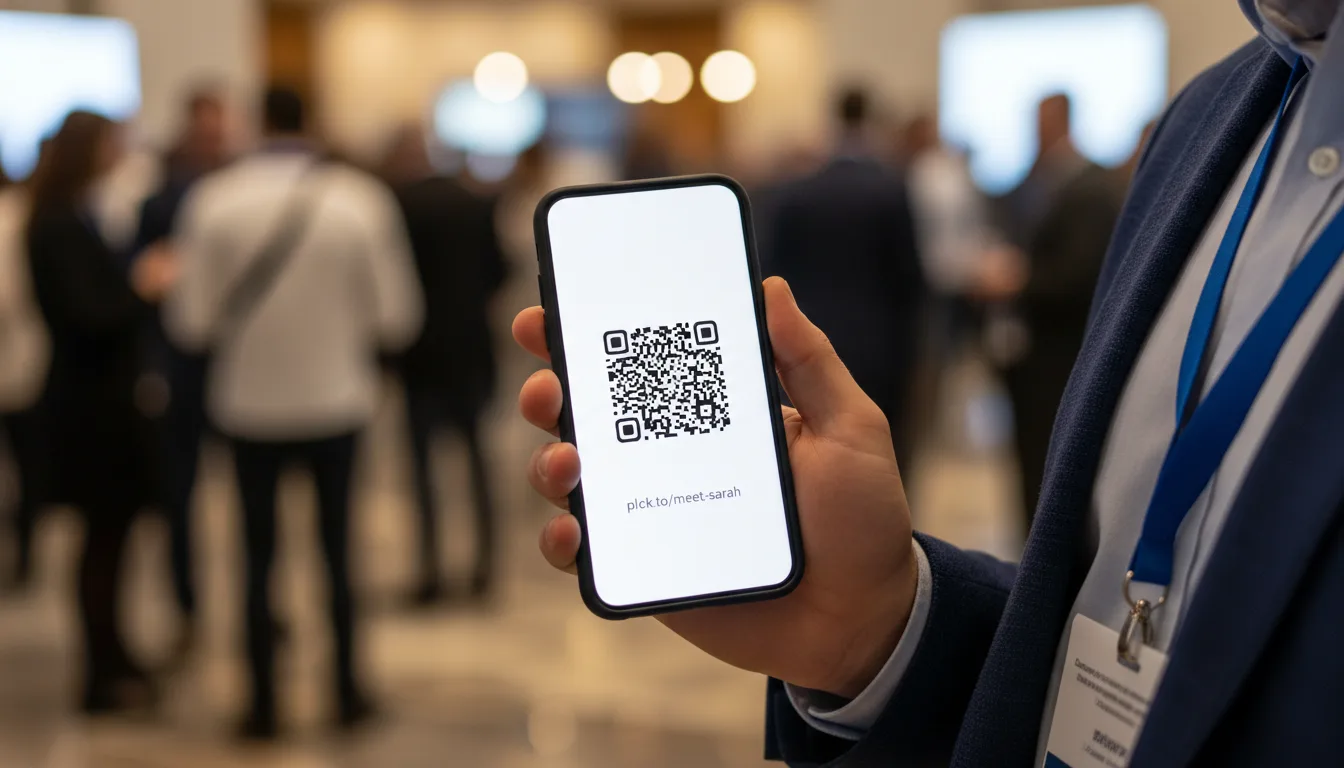
For instance, you could create a link like planck.to/edu-casestudy. Not only does this look incredibly professional if you print it on a physical badge or card, but it also instantly communicates what the user will find when they click. Similarly, your main digital networking hub, that centralized "link in bio" page, might live at something elegant like planck.to/meet-sarah. See how easy that is?
Step 3: Generate Dynamic QR Codes and Enable Analytics
The final puzzle piece for seamless implementation is accessibility. Take that fantastic primary short link you just created (e.g., planck.to/meet-sarah), and generate a dynamic QR code. Why dynamic? Because it's a game-changer! With a dynamic QR code, you can update the underlying destination URL at any time without ever having to reprint the physical QR code itself. How cool is that? You can even save this QR code as your phone's lock screen wallpaper during the event, making it incredibly simple for prospects to scan it in literally under two seconds. Talk about friction-free engagement!
By cleverly using a managed short link embedded within a dynamic QR code, you're essentially future-proofing your networking materials. Even if you switch your calendar software or update that case study URL next month, your physical QR code and short link remain perfectly valid and unbroken. No more dead links!
The Payoff: Measuring Real Networking Success
Unlocking Quantifiable Engagement
This is where the true power of this methodology really shines through – in the days and weeks following the event. Historically, you'd just wait and hope the phone would ring, right? Now, that's completely changed. You can simply log into your link management dashboard and instantly feast your eyes on tangible metrics. You'll see precisely how many times your primary educational hub (planck.to/meet-sarah) was accessed. You can even analyze time-of-day metrics to understand exactly when attendees were most likely to review your materials – often on their flight home, or perhaps the morning after the event with a fresh cup of coffee. This isn't guesswork; it's data!
Strategic Follow-Ups, Driven by Data
But it gets even better than simple click counts. Granular link tracking allows you to drill down and see which specific educational resources resonated most with your new contacts. Let's say you notice that your link pointing to "Advanced Team Training Strategies" received triple the clicks of all your other resources. Boom! You've just gained a massive piece of intelligence. When you craft your follow-up emails or those personalized LinkedIn messages, you no longer have to guess what they care about. You can confidently lead the conversation with the exact topic that the data *proves* they're genuinely interested in. This transforms your outreach from a shot in the dark to a precision strike.
Key Takeaways: It's Time to Redefine the "Business Card"
Education First, Pitch Second – Always
Here's a core philosophy for modern professionals: view networking not as a transaction, but as the exciting initiation of an educational relationship. By cleverly utilizing managed links, you're not just sharing info; you're providing immense value upfront. You're not just saying, "Hey, hire me!"; you're saying, "Here is an easily accessible, highly curated collection of resources that will genuinely help you solve your problem *today*." What a difference that makes!
Data-Driven Relationship Building: Agile and Effective
This approach truly transforms networking from an abstract art into a measurable science. Utilizing platforms that empower you to track, measure, and analyze engagement gives you incredible agility. If a specific shortened link isn't getting the clicks you expected, guess what? You can easily change the call-to-action or even swap out the resource entirely. Your networking strategy becomes dynamic, responsive, and always improving. Now *that's* smart business.
Think of every link you share as a digital handshake. A broken link or a clunky, unreadable URL is the digital equivalent of a weak, forgettable handshake. Conversely, clean, branded, and impeccably tracked links effortlessly convey professionalism, competence, and a keen eye for detail.
How to Apply This: Your Practical Blueprint for Success
Ready to seriously modernize your networking game? Excellent! Here's a practical, step-by-step guide to building your very own educational digital link hub before your next big event. Trust me, it's easier than you think.
1. Audit Your Current Networking Assets
Take about 30 minutes to honestly review what you currently share with new connections. Are you simply pointing them to a cluttered homepage? Are you still manually attaching hefty PDFs to emails? Identify your absolute top three to five performing educational assets – these could be that killer recent blog post, a super useful downloadable checklist, or your captivating video introduction. The key here is to ensure these assets are already living online and each has its own distinct, accessible destination URL.
2. Set Up Your Link Management Foundation
Now, it's time to get down to business. Create an account with a robust link management tool like Planck.to. Your primary goal here is to establish a central command center for *all* your professional links. Once you're logged in, begin taking those long, unruly destination URLs you identified in Step 1 and convert them into clean, customized, and brand-aligned short links.
Always use clear, descriptive "slugs" – that's the part of the URL that comes after the slash. Here are some examples:
- Instead of a messy Calendly link, create planck.to/book-coffee
- Instead of a raw Dropbox link to your portfolio, create planck.to/2024-portfolio
- For a specific conference you're attending (e.g., Summit 2024), create a tailored hub at planck.to/summit-hello
3. Implement Link Tags and Folders
As your library of shortened links grows, organization becomes absolutely paramount. Don't let it become a digital junk drawer! Make sure to fully utilize the Tagging and folder features within your chosen link management platform. For instance, you could create a specific folder named "Networking Events" and then tag individual links by the exact event you attended. This simple system allows you to look back months later and instantly see which events generated the highest long-term engagement with your valuable educational content. That's powerful!
Before you even shorten your destination URLs, always, always utilize UTM parameters. Why? Because UTM parameters enable your website's Google Analytics (or whatever analytics tool you use) to precisely recognize where that traffic came from – even from an *offline* event! This seamlessly bridges the gap between your physical networking efforts and your deep digital analytics. It's truly a game-changer for understanding ROI.
4. Test Before You Connect – Every Single Time!
Please, for the love of all that's professional, never, *ever* walk into an event without thoroughly testing your digital assets. It's just good practice! Scan your generated QR code with different devices (both iOS and Android). Click your shiny new short links to ensure they load rapidly and redirect exactly where they should. Take a quick peek at your analytics dashboard to confirm that your test clicks were registered. This confidence in your technology frees you up to focus entirely on what truly matters: making genuine, human connections during the networking event itself.
Conclusion: It's Time to Evolve Your Professional Presence
Let's be real: the era of simply hoping a new contact remembers to painstakingly type in a complicated URL from a flimsy paper business card is officially, gloriously over. By embracing a forward-thinking strategy that leverages digital cards and intelligent URL shortening, you're doing so much more than just sharing contact information. You're initiating an immersive, trackable, and deeply educational experience for every person you meet.
Effective link management provides the robust framework you need to educate your prospects seamlessly, guiding them to your very best resources with absolutely zero friction. And even more importantly, it equips you with the crucial, actionable data needed to execute highly personalized, incredibly strategic follow-ups that truly resonate. Whether you're an educational consultant, a sharp sales professional, or an innovative independent creator, mastering the art and science of the short link is undeniably one of the most practical, high-ROI skills you can implement for unparalleled networking success.
So, what are you waiting for? Start small. Consolidate your top three assets, create those custom branded links, generate your dynamic QR code, and then sit back and watch as your networking efforts transform from an unpredictable, hit-or-miss gamble into a measurable, consistently successful strategy. Your future connections will thank you!
Ready to get started?
Join thousands of users who are already using our platform to manage their links efficiently.
Create Your Free Account