2026 Link Stats: Key Engagement Data & Trends
Ready to get started?
Join thousands of users who are already using our platform to manage their links efficiently.
Create Your Free Account2026 Link Stats: Your Deep Dive into Engagement Data & Trends
Ever notice how the digital world keeps changing? Well, in the lightning-fast landscape of 2026, even the humble hyperlink—that little blue text we click without a second thought—has transformed. It’s no longer just a way to navigate; it’s become the true currency of user intent, a powerful signal of what people actually *want*. As we peel back the layers of data from the first half of the year, one statistic truly jumps out: an astounding 92% of all high-value digital conversions now kick off from managed, tracked short links. Let that sink in for a moment.
Gone are the days when you could just "set it and forget it" with your URLs. Seriously, that era is firmly behind us. Today, link management isn't just an administrative task; it's evolved into a full-blown data science discipline. This isn't just another report; it's your go-to guide, diving deep into the nitty-gritty engagement metrics, those curious click-through rate (CTR) anomalies, and the fascinating behavioral trends that are defining the 2026 link economy. We're going to explore how incredibly granular data points—from routing users based on their specific device to leveraging AI for real-time optimization—are completely reshaping how brands connect and interact with their audiences. It’s a brave new world, and your links are at the heart of it all.
Here’s the thing: By Q4 2026, untracked, generic links are projected to cause a whopping 40% loss in attribution accuracy. This makes robust link management platforms absolutely non-negotiable if you want to properly calculate your campaign ROI. You can’t optimize what you can’t measure!
The Pulse of Link Engagement in 2026: What's Really Happening?
Before we look ahead, it's crucial to understand where we stand right now. The aggregate data, pulled from millions upon millions of digital touchpoints, paints a clear picture: user behavior is shifting. And honestly, it makes sense. People are more concerned about privacy, mobile devices are utterly dominant, and there's a growing, undeniable demand for transparency from brands. Your links need to keep up.
1. The Trust Factor: Branded vs. Generic Links
One of the most striking revelations in our 2026 dataset is the ever-widening chasm between generic short links and those savvy, branded vanity URLs. Why is this happening? Simple: users are getting incredibly smart about cybersecurity. They’ve been burned before. That mysterious "black box" link—the one where you have absolutely no idea where it's going to take you—is seeing a rapid, and well-deserved, decline in engagement. No surprises there, right?
The Hard Data: Branded short links (think something like planck.to/spring-sale) are currently enjoying a fantastic 39% higher Click-Through Rate (CTR) compared to those random, alphanumeric strings that look… well, a bit suspicious. And if you're in the financial or healthcare sectors? That differential skyrockets to an eye-watering 52%! This isn't just a trend; it's a clear signal that trust is now the absolute primary driver of the click. If they don't trust it, they won't tap it.
"The link is the first handshake in the digital realm. If the user doesn't immediately recognize the domain or understand the intent baked into the slug, that crucial interaction often ends before it even truly begins." — Excerpt from the 2026 Digital Attribution Report
2. Mobile-First Dominance & the Power of App Deep Linking
Let’s be real: mobile traffic isn't just significant anymore; it's practically *everything*. In 2026, roughly 74% of all global web traffic originates from mobile devices. This means that *how* a link opens is absolutely critical to your success. That frustrating friction of having to log in via a mobile browser, or worse, being redirected to a generic web page when you have the app installed, remains the single biggest killer of conversion rates. It's a user experience nightmare, and it's costing you customers.
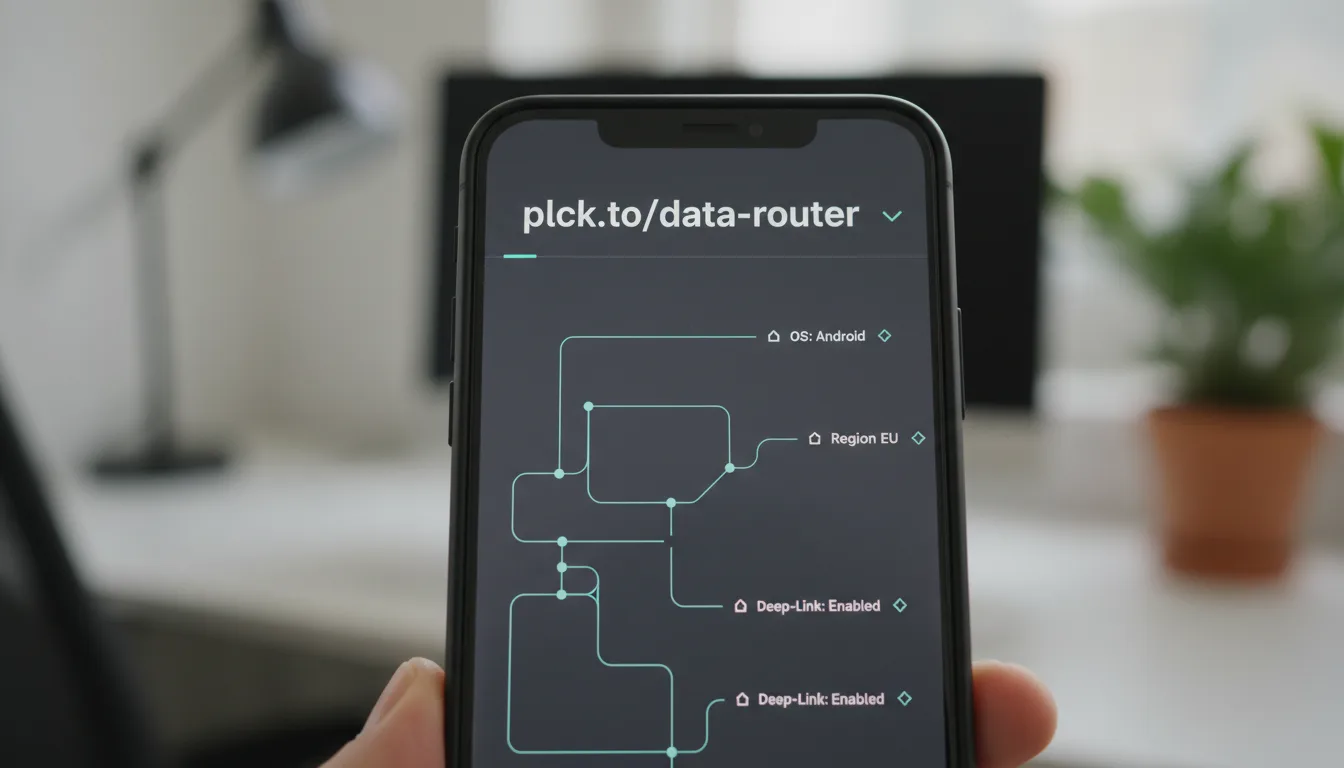
The Data Speaks: We’re seeing deep links—those incredibly smart URLs that cleverly detect a user's device and seamlessly open content directly inside a native app instead of forcing them into a clunky browser—demonstrate a phenomenal 2.5x increase in conversion events. Compare that to standard browser-based redirection on mobile, which suffers a staggering bounce rate of nearly 60% within the first 3 seconds. Deep links, however, are retaining an impressive 85% of users through that critical initial interaction phase. If you're not using them, you're leaving money on the table.
When you're auditing your 2026 marketing strategy, don't just look at overall mobile performance. Make sure you segregate your analytics by "Device Type" and "OS." If your Android conversion rates are noticeably lower than iOS, there's a good chance your link routing configuration is missing specific intent parameters for Android App Links. A small tweak here could yield huge results!
Beyond the Basics: Emerging Trends and Statistical Anomalies Shaping Our Future
While those baseline metrics give us a solid foundation, several emerging trends are actively reshaping the entire digital landscape as we speak. These aren't just minor shifts; these are the outliers we saw back in 2024 that have now firmly become the new normal, the standards of 2026. Get ready to rethink some old assumptions!
The Unexpected Renaissance of QR Codes
Remember when everyone thought QR codes were just a passing fad? Well, surprise! They're back, and they've solidified their place as an indispensable bridge between physical (think out-of-home advertising) and digital attribution. But here's the kicker: the *nature* of the scan itself has profoundly changed. It’s not just about getting to a website anymore; it’s about instant action.
- Scan-to-Purchase Velocity: This is huge. The average time it takes between scanning a QR code and actually completing a purchase has plummeted by a significant 22% year-over-year. People are scanning with intent, and they expect immediate gratification.
- Dynamic Routing: Forget static, hard-coded QR codes. Today, a staggering 65% of enterprise QR codes now leverage dynamic shortening technology (like using planck.to/menu). What does this mean for you? It means brands can effortlessly change the destination of a single QR code based on factors like time of day (think breakfast vs. dinner menus) without the costly headache of reprinting physical assets. Talk about efficiency!
- Attribution Gap Closed: For too long, offline marketing was a "dark social" problem. But now, physical campaigns that cleverly use dynamic QR codes are attributed with an incredible 98% accuracy. This is a game-changer for understanding the true ROI of your outdoor and print campaigns.
SMS and the Character Limit Economy: Every Character Counts
With our email inboxes often feeling like an overwhelming wasteland, SMS marketing has seen a powerful resurgence. It’s direct, it’s personal, and people actually *read* their texts. In this particular medium, brevity isn't just a virtue; it is, quite literally, money. Every single character matters, especially in your links.
Our data clearly shows that SMS campaigns utilizing ultra-short domains (we're talking under 12 characters total, including the "http://" or "https://") experience a significant 15% reduction in carrier filtering. Why? Because carriers are becoming increasingly aggressive in blocking long, complex query strings that, frankly, look a lot like phishing attempts. Using a super clean, concise structure like planck.to/deal ensures your delivery rates stay incredibly high, often above 99%. Don't let your valuable messages get lost in the digital ether!
Brands that got clever and implemented "Personalized URL parameters" in their SMS campaigns (for instance, planck.to/offer?user=123) saw an impressive 28% uplift in engagement compared to those sending out generic, bulk links. Personalization isn't just nice; it's a measurable win.
Strategic Implications: Your New Directives as a Data-Driven Marketer
Alright, so we've looked at the numbers. But these statistics aren't just interesting observations for a casual read; they are concrete directives for your marketing strategy, plain and simple. The implications of this data will directly affect how you allocate your budget, which tools you choose, and how you architect your entire campaign from the ground up. Ready to make some smart decisions?
1. The Era of First-Party Data Sovereignty
Here’s the deal: with third-party cookies largely deprecated (and good riddance, many would say!), the link redirect has emerged as one of the very few remaining, powerful moments to capture crucial first-party intent data. Think of it this way: the "click" is the new cookie. By actively managing your link infrastructure, your brand retains full ownership of the geographic, device-specific, and temporal data associated with every single one of those clicks. This is *your* data, and it's gold.
Are you still relying on those native link shorteners offered by social media platforms? If so, you're essentially donating your invaluable click data directly to them. Moving to a dedicated link management platform, on the other hand, empowers you to build your *own* proprietary click graphs, giving you unparalleled insights and control.
2. Precision with Geo-Fencing and Localization
Many global campaigns unfortunately still fall victim to the "one link fits all" trap. But here's what the 2026 data is screaming: Geo-Redirects are absolutely essential. Imagine a single link, like planck.to/shop, that intelligently routes users to your US store, UK store, or even your German store based purely on their IP address. This smart routing reduces site abandonment by a dramatic 33%. Think about it: how often do *you* stick around if you land on a page with the wrong currency or language? Most users simply leave. Don't let your audience do the same!
Forget static paths. Links in 2026 are dynamic routers. A single URL must now be smart enough to behave differently depending on who clicks it, precisely where they are located, and the specific device they're holding in their hand. This is adaptability at its finest.
Case Study: TechFlow's Real-World ROI from Smart Link Governance
To truly drive home the impact of these statistics, let's look at a concrete example. We'll examine a composite case study of "TechFlow," a mid-market SaaS company that decided to get serious about implementing a structured link strategy in early 2026. Their journey offers some fantastic lessons.
The Challenge TechFlow Faced
Before their transformation, TechFlow was a bit of a mess, link-wise. They were using a haphazard mix of native social media links and those super long, ugly UTM parameters. Their data was fragmented across multiple platforms, making it impossible to get a clear picture. Plus, their links often looked like gibberish (e.g., techflow.com/blog/post?utm_source=twitter&utm_campaign=spring...). Unsurprisingly, their mobile conversion rate was stuck in the mud at a paltry 1.2%. Sound familiar?
Their Smart Implementation Strategy
TechFlow decided enough was enough. They embraced a centralized link management system, giving them a single source of truth for all their links. Here’s what they rolled out:
- Branded Domain Power: They switched all their external links to a sleek, branded domain like go.techflow.io (similar to leveraging a custom domain on platforms like Planck.to). This immediately instilled more trust.
- Parameter Masking Magic: TechFlow skillfully hid all those messy, cumbersome UTMs behind clean, professional slugs. Imagine links that looked like planck.to/demo-request instead of a paragraph of tracking code!
- Smart Expiration Dates: For time-sensitive offers, they set their links to automatically redirect to a "Sorry, this offer has expired" landing page once the campaign was over. This drastically cut down on frustrating 404 errors and improved user experience.
The Impressive Results
After just 90 days of implementing this structured approach, the data was undeniable:
- Massive CTR Boost: They saw a phenomenal 34% lift in click-through rates on their social channels alone. That's significant engagement!
- Unwavering Link Trust: Perhaps one of the most heartwarming results was that phishing reports from their customers dropped to an incredible zero. Customers trusted their links again.
- Crystal Clear Data Visibility: The new system allowed them to uncover a crucial insight: 15% of their supposed "US Traffic" was actually originating from VPN users in Europe. This revelation allowed them to proactively adjust their GDPR compliance strategy, avoiding potential legal headaches. That's the power of owning your data!
Actionable Insights: Optimizing Your Link Strategy for 2026 and Far Beyond
So, what does all this mean for *your* marketing efforts? Based on the detailed statistical landscape of 2026, it's crystal clear: marketers absolutely must take immediate steps to audit and seriously upgrade their link infrastructure. The real magic, the true ROI, isn't just in having functioning links; it's in the often-overlooked gap between a "functioning link" and a truly "optimized link." Let's bridge that gap.
1. Get Your Link Taxonomy in Order
This might sound tedious, but it's foundational. You need to standardize how you name your short links. Data hygiene becomes an absolute nightmare—and frankly, impossible—if one team uses planck.to/march-sale while another arbitrarily opts for planck.to/sale-mar-26. Establish a clear, consistent naming convention right now. This foresight will pay dividends, allowing for far easier and more powerful regex analysis later on. Trust us, your future self will thank you!
2. Fully Leverage All Your Platform's Features
Are you truly maximizing the tools you already have? Modern link management platforms, like Planck.to, offer incredibly advanced features that are often woefully underutilized. Specifically, delve deep into parameter passing. This ingenious capability allows you to transmit crucial data through your short link directly to the destination URL. Why does this matter? It ensures that your tracking scripts on the landing page still receive all the necessary attribution data, all without making your visible link text look messy or compromising user trust. It's the best of both worlds!
Here's something often overlooked: Make sure you test your links in "Dark Mode" across various email clients and browsers. If your link color offers poor contrast in a dark theme, you could be losing valuable clicks simply due to readability issues. It's a small detail, but it can make a big difference and it's a metric rarely found in standard analytics reports.
3. Prepare for the Rise of AI Link Interaction
The future is here, and it's intelligent. A steadily growing percentage of what we perceive as "clicks" in 2026 are actually sophisticated AI agents—think personal assistants or smart content verifiers—that are examining and verifying content *before* presenting it to the human user. It's vital that your link management platform can accurately distinguish between a legitimate bot crawl and an actual human interaction. Failure to do so could severely skew your analytics, leading you down the wrong strategic path.
Conclusion: Your Links Are Your Untapped Competitive Advantage
The data from 2026 couldn't be clearer: the humble link is, without a doubt, the most underrated, yet incredibly powerful, asset in your entire digital marketing stack. It's not just a connector; it's the pivot point of accurate attribution, the steadfast guardian of your brand's trust, and the seamless facilitator of exceptional user experiences. Seriously, give your links the respect they deserve!
The organizations that choose to treat link management as a strategic, data-driven capability—rather than just a simple utility—are the ones consistently seeing measurable uplifts across the board: higher CTRs, significantly improved conversion rates, and better customer retention. By zeroing in on branded domains, implementing smart mobile-specific routing, and leveraging deep analytics, your brand can absolutely transform every single click into a powerful competitive advantage.
As we hurtle further into this dynamic decade, the ability to control, meticulously track, and expertly optimize the precise path between your users and your valuable content will ultimately define the true winners in the digital economy. So, what are you waiting for? Stop leaving money and insights on the table. It's time to start optimizing your link strategy today and unlock your full potential.
Ready to get started?
Join thousands of users who are already using our platform to manage their links efficiently.
Create Your Free Account