Maximize Link Value: 5 Data-Driven Steps for URLs
Ready to get started?
Join thousands of users who are already using our platform to manage their links efficiently.
Create Your Free AccountUnlocking Your Links: 5 Data-Driven Steps to Maximize URL Value
Ever think about the humble URL? You know, that string of characters that guides users from one corner of the internet to another. Most of us, especially in the early days of digital marketing, just treated it as a simple address — a necessary utility to get from Point A to Point B. But here's the thing: if you're still seeing URLs that way, you're missing out. Big time.
Today's savviest digital marketers and data analysts understand that a URL isn't just a bridge; it's a powerful data asset. When you optimize it correctly, it doesn't just improve navigation — it can fundamentally change the game for your campaign performance, driving real, tangible results.
Think about it: have you ever hesitated to click a long, messy link? You're not alone. Recent industry analyses confirm that those generic, unoptimized links often suffer from a severe lack of consumer trust, leading to disappointingly low Click-Through Rates (CTR). But flip that coin: branded and smartly optimized links? They can actually boost your CTR by a staggering 39% compared to their generic cousins. In a world where Customer Acquisition Cost (CAC) has unfortunately skyrocketed by about 60% over the last half-decade, we can't afford to leave any efficiency on the table. Squeezing every last percentage point out of your traffic sources isn't just a nice-to-have anymore; it's an absolute financial imperative.
So, how do we shift our link management strategy from being a passive background task to an active, performance-driving powerhouse? We turn to the data, of course! This comprehensive guide is going to walk you through a five-step framework designed to supercharge your URL optimization. Our goal? To maximize link equity, deliver a superior user experience, and sharpen your attribution modeling like never before.
Step 1: Structural Hygiene & Semantic Relevance – Making Links User-Friendly
Let's kick things off with the basics: the structure of your URL. Often, when a Content Management System (CMS) auto-generates a URL, it's a messy affair. You're looking at meaningless alphanumeric strings, complicated query parameters, and lengths that stretch on forever. Does that sound familiar? Well, here's some compelling data for you: research consistently shows that shorter, more descriptive URLs don't just look better; they correlate with higher search engine rankings and significantly improve user recall. That's a win-win in my book!
The Silent Struggle: Cognitive Load and Link Trust
When someone glances at a link, they're making a split-second judgment. Is it safe? Is it relevant? Do I even *want* to click this? A long, convoluted URL doesn't just look ugly; it ramps up the cognitive load on the user. Their brain quickly flags it as potentially suspicious, triggering those internal "spam" heuristics. It's like being handed a mysterious, unlabeled package — you're naturally more hesitant to open it. Our job in optimization is to reduce that friction, making the link as inviting and trustworthy as possible.
A fascinating study on link trust factors revealed that users are 2.5 times more likely to click a link if it clearly tells them where it's going (that's semantic relevance!) compared to a confusing jumble of characters. Clarity truly builds confidence.
Mastering the Art of Semantic Slugs
When we talk about link shortening, the "slug" — that customizable part of the URL that comes right after your domain — becomes incredibly valuable real estate. Instead of passively accepting a random, meaningless string, you've got to take control. Customize that slug to perfectly match the content's intent and keywords. Think of it as a mini headline for your link!
Let's look at a quick example to drive this home:
- Bad:
yourdomain.com/blog/posts/2023/category-id=882&ref=tw(Yikes! Nobody's clicking that with confidence.) - Better:
planck.to/generic-id(Okay, shorter, but still generic and offers no clue about the content.) - Optimized:
planck.to/seo-strategy-2024(Now THAT's a winner! Short, descriptive, and you instantly know what you're getting.)
By utilizing a smart platform, you can customize the tail end of your link precisely like this. You're not just shortening a URL; you're effectively pre-selling the click. When a user sees something like planck.to/seo-strategy-2024, they immediately grasp the value proposition and feel much more confident about engaging. It's about transparency and trust from the very first glance.
Step 2: The Trust Protocol – The Power of Branded Domains
While those semantic slugs we just talked about are absolutely crucial, let's be real: the domain itself carries the heaviest weight when it comes to establishing authority and trust. This is why Branded Short Domains (BSDs) are considered the gold standard in link management optimization. It's not just a trend; data consistently shows that branded links significantly outperform generic short links across nearly all metrics — everything from deliverability rates to, you guessed it, higher click-through rates.
Battling Spam Filters & Boosting Deliverability
Here's a cold, hard truth: generic public shorteners, while convenient, are often abused by spammers. Because of this, email service providers and social media algorithms have learned to treat them with a healthy dose of suspicion. If a public shortener's domain gets blacklisted — which happens more often than you'd think — your legitimate marketing links can suffer serious collateral damage, even if you're playing by the rules. It's like guilt by association, and it can severely impact your reach.
"Think of your link as the initial handshake before any conversation truly begins. A branded domain ensures that handshake is firm, professional, and instantly trustworthy. It sets the tone."
Building Brand Consistency & Familiarity
Beyond just avoiding spam filters, using a consistent, custom short domain — whether it's a tailored one for your brand or a reliable option like planck.to for specific campaign assets — creates a powerful visual footprint. This consistent presence does wonders for reinforcing brand awareness. Even if a user doesn't click your link immediately, simply seeing your brand name embedded within the link structure contributes to something called the "Mere Exposure Effect." It's a psychological phenomenon where people develop a preference for things simply because they're familiar with them. The more they see your brand, the more they'll trust and remember it.
It's not just theory! Brands that make the smart switch from generic short links to custom branded links frequently report a significant 34% increase in CTR within their email marketing campaigns. Why? Pure and simple: users inherently trust a destination that's clearly branded.
This isn't just about looking good; it's about building a foundation of credibility that directly translates into improved engagement and better campaign performance. Your brand deserves to be front and center, even in the smallest details like your URLs.
Step 3: Advanced Attribution with UTM Governance – Unmasking Your Traffic
Alright, we've talked about making links look good and trustworthy. But what's the point of all that effort if you can't accurately measure its impact? Let's be honest, optimization is utterly impossible without precise measurement. One of the biggest headaches in digital strategy is "Dark Traffic" — that frustrating chunk of direct traffic in your analytics that actually originates from specific marketing channels like social media apps, SMS messages, or emails, but has had its referrer data stripped away. It's like having a party and not knowing who half your guests are! To combat this data void, a rigid and consistent UTM (Urchin Tracking Module) strategy isn't just helpful; it's absolutely essential.
The Golden Rule: Hierarchy of Parameters for Clean Data
For your data to be truly useful and reliable, standardization is key. You absolutely must define a clear hierarchy for your UTM parameters. This ensures that your analytics platform (like GA4, for example) can sort and interpret your data correctly, giving you accurate insights. Without it, you're looking at a messy spreadsheet that tells you very little. A standard, robust framework typically includes:
- utm_source: This tells you the specific referrer, like
newsletter,linkedin, orfacebook. - utm_campaign: This identifies the specific promotional effort or campaign you're running, for example,
summer_sale_2024orq3_lead_gen.
These parameters, when used consistently, paint a crystal-clear picture of where your traffic is actually coming from and which efforts are truly paying off.
The Beautiful Synergy: Masking Complexity for User Experience
Now, here's the catch with UTMs: while they're incredibly powerful for data, they also make URLs incredibly long, clunky, and, let's face it, ugly. And what did we just learn in Step 1? Long, ugly URLs hurt the user experience! This is precisely where the synergy between comprehensive UTMs and intelligent link shortening becomes absolutely critical. You can append all that extensive, granular tracking data to your destination URL, giving your marketing team everything they need, and then gracefully mask it behind a clean, user-friendly short link.
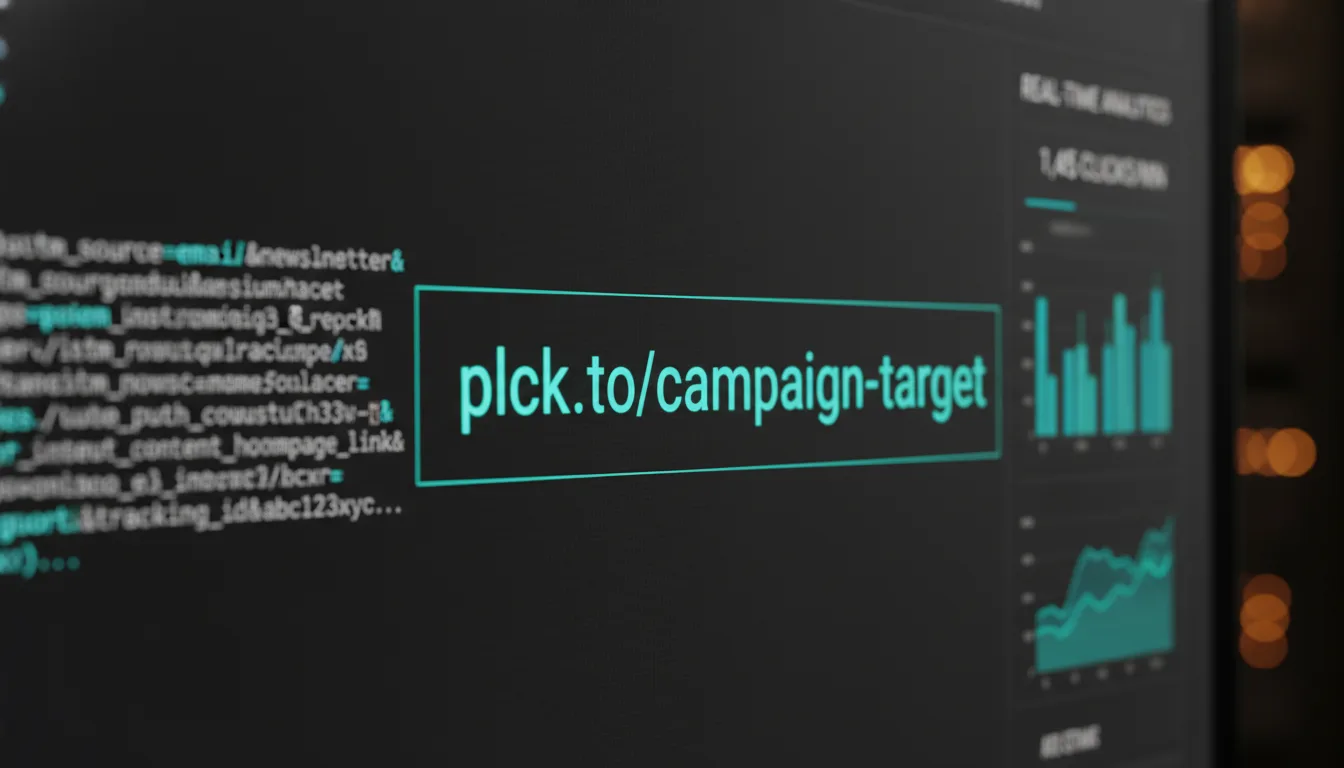
For instance, your *actual* destination URL might look something like this, filled with invaluable data:domain.com/landing?utm_source=twitter&utm_medium=social&utm_campaign=launch_event_promo
But the magic happens when your user sees and clicks this instead:planck.to/launch-event
This strategy truly delivers the best of both worlds: your marketing team gets all the granular data they need to make informed decisions, while your users enjoy a clean, trustworthy, and pleasant experience. Everyone wins!
Always, always, *always* use lowercase for your UTM parameters. Analytics tools are notoriously case-sensitive. This means "Email" and "email" will be treated as two entirely separate entries, effectively splitting your data into two rows and completely ruining your reporting accuracy. Consistency is king!
By embracing this approach, you transform potential "dark traffic" into illuminating insights, allowing you to fine-tune your campaigns with unparalleled precision.
Step 4: Contextual Routing – Seamless Mobile & Deep Linking Experiences
Let's face it: we live in a mobile-first world. Data from 2024 emphatically states that over 58% of global web traffic now originates from mobile devices. So, it's pretty clear that our links *must* perform flawlessly on these devices. Yet, a common oversight occurs when a standard URL simply directs mobile users to a generic mobile web browser — completely bypassing an installed app they might already have! This creates a fragmented, degraded user experience and, you guessed it, lower conversion rates. Optimizing link value in today's landscape absolutely means ensuring your user lands in the *perfect* environment, every single time.
Smart Redirection: Guiding Users by Device
This is where sophisticated link management truly shines. Imagine a single link, like planck.to/download-app, that's intelligent enough to behave differently based on the user's Operating System. That's device targeting in action! Here's how it works:
- For an iOS User: The link smartly redirects them straight to the Apple App Store, ready to download your app.
- For a Desktop User: No app stores needed here! They're directed to your product landing page, perfectly optimized for a larger screen.
This level of precision ensures a frictionless journey for every user, no matter their device. It significantly boosts the likelihood of app installs, deeper engagement, and ultimately, better conversion rates.
The Renaissance of QR Codes – Bridging Digital and Physical
Beyond digital device routing, let's talk about the incredible resurgence of QR codes. They've become an indispensable bridge between our physical and digital worlds. And here's the best part: when you power your QR codes with dynamic short links, you unlock a whole new dimension of tracking. You can now gather offline engagement metrics that were previously completely invisible!
By encoding a versatile short link into a QR code, you gain an immense advantage: the ability to change the destination URL *after* the code has already been printed. Imagine the implications! This "recyclability" means huge savings on printing costs, prevents embarrassing dead links on physical marketing materials (no more scrambling to reprint flyers!), and keeps your campaigns agile. Need to update an offer? Change a landing page? No problem — just edit the short link's destination, and your existing QR codes instantly point to the new content. It's a game-changer for integrated campaigns.
Step 5: The Feedback Loop – Analytics & Iteration for Continuous Improvement
We've come to the final, but arguably most crucial, step in our framework: diving deep into the data harvested by your newly optimized links. Think of short links as providing an indispensable layer of "middle-man" analytics. This data doesn't just replicate what you see in Google Analytics; it validates your other data sources and, critically, can uncover trends and insights that traditional web analytics might miss, especially due to growing cookie consent barriers.
Beyond Clicks: Key Metrics That Truly Matter
To truly maximize link value, we need to move beyond simple "click counts." While clicks are good, they're just the tip of the iceberg. You should be looking at the *velocity* and *geography* of engagement. These deeper metrics offer invaluable strategic intelligence:
- Temporal Distribution: This asks: *When* are clicks actually happening? If you send out an email blast at 9 AM, but your planck.to link shows peak click velocity at 6 PM, it's a clear signal that your send-time strategy is completely out of sync with your audience's actual behavior. You're missing prime engagement windows!
- Geographic Hotspots: Are you unexpectedly seeing a ton of traffic from a specific region or country you weren't targeting? This data can be incredibly powerful. It might signal untapped markets ripe for expansion, or, on the flip side, it could indicate bot traffic farms that need to be swiftly identified and filtered out to protect your data integrity.
- OS/Browser Data: Observing high click rates but surprisingly low conversions from users on a particular operating system or browser? This is a flashing red light! It strongly suggests there might be a rendering issue or a poor user experience on your landing page specifically for that browser type. Identifying and fixing this could unlock significant conversions.
One of the greatest advantages of dedicated link analytics is their real-time nature. Traditional web analytics platforms can sometimes have a data latency of 24-48 hours. But with real-time link data, you can make immediate campaign course corrections, optimizing on the fly rather than waiting days for insights.
This constant feedback loop is your secret weapon. It allows you to move beyond guesswork and make truly informed, agile decisions that drive continuous improvement for all your digital efforts.
Putting the Framework into Practice: Your Link Optimization Workflow
Understanding the theory behind link optimization is essential, absolutely. But let's be real, the true magic — where actual value is generated — happens in the execution. So, how do you take these five data-driven steps and integrate them into your daily workflow? Here’s a brief, actionable workflow outlining how you can apply this framework, often with the help of a robust tool like Planck.to, to manage the entire lifecycle of your links:
- Tag Your URL with Precision: Next, use a reliable UTM builder (many platforms have one built-in) to append all your essential tracking parameters: source, medium, and campaign data. Yes, your link will now look long and unwieldy, but that's perfectly fine for now!
- Configure Smart Routing (If Needed): If your campaign targets mobile app users or requires a dynamic experience, this is your moment. Set up device targeting to ensure, for example, that iOS users are directed to the Apple App Store, Android users to Google Play, and desktop users to your web page.
- The Compounding ROI of Smart Link Optimization
The distinction between a raw, untouched link and a meticulously optimized one isn't just cosmetic. It's the profound difference between simply guessing about your audience and truly *knowing* them. By systematically stripping away user friction, layering on semantic trust, leveraging the power of branding, and applying precise, granular tracking, you transform what was once a passive navigation element into an invaluable, strategic asset for your entire organization.
Data-driven marketers understand a fundamental truth: small efficiencies, when consistently applied, compound into monumental gains. Imagine the impact of a modest 10% increase in CTR combined with a robust 15% improvement in attribution accuracy. These seemingly minor tweaks can lead to truly significant gains in your overall Return on Ad Spend (ROAS), giving you a competitive edge. It's time to elevate the status of your URLs. Start treating them with the same level of scrutiny, creativity, and strategic thought that you dedicate to your ad copy or your stunning creative designs. When you do, the data — and the results — will undeniably follow.
Ready to get started?
Join thousands of users who are already using our platform to manage their links efficiently.
Create Your Free Account