SaaS Success: URL Management Drives Conversion
Ready to get started?
Join thousands of users who are already using our platform to manage their links efficiently.
Create Your Free AccountThe Sneaky Culprit: Unmasking the Silent Friction Point in User Onboarding
In the fiercely competitive world of Software as a Service (SaaS), friction isn't just a minor annoyance; it’s the ultimate enemy of growth. We, as product managers and growth marketers, obsess over every tiny detail. We're talking UI latency, the exact number of fields in a registration form, and the nuanced psychology behind every email subject line. We fine-tune, we A/B test, and we optimize until our eyes blur. But here's the thing: a truly critical data touchpoint often flies completely under the radar. What is it? The seemingly innocuous structure and behavior of the URL itself.
Now, you might be thinking, "A URL? Really?" Yes, really! This isn't just some technicality. It's a psychological trigger. To really drive this home, let's dive into a composite use case featuring "CloudSync," a fantastic scaling B2B enterprise tool. We’re going to show you exactly how strategic link management can transform raw, unengaged traffic into genuinely qualified user engagement.
Picture this common scenario: a promising prospect receives a highly targeted onboarding email. The copy is incredibly persuasive, the value proposition is crystal clear – everything feels perfect. But then they glance at the Call-to-Action (CTA) link. What do they see? A generic, cryptic string of characters, spewed out by some automated marketing platform. Sound familiar? This isn't just an ugly link; it's a silent assassin that breaks the Trust Chain. For a fleeting moment, that user hesitates. "Is this safe? Where does this actually lead?" In that tiny, micro-moment of doubt and hesitation, your precious conversion percentages start to bleed away. It’s a subtle but powerful barrier to entry.
In the world of SaaS analytics, a URL is so much more than a simple transport mechanism moving data from Point A to Point B. It’s a powerful psychological trust signal, a crucial data-gathering instrument, and a direct influencer on your conversion attribution rates.
This case study isn't just theoretical; it's a deep dive into how CloudSync shifted from a passive, 'set it and forget it' approach to link generation, embracing active, analytical URL management. The result? Measurable, undeniable improvements in critical metrics like Net Dollar Retention (NDR) and Customer Acquisition Cost (CAC). You're going to want to see this.
The Challenge: Facing Down Data Fragmentation and the Dreaded Link Rot
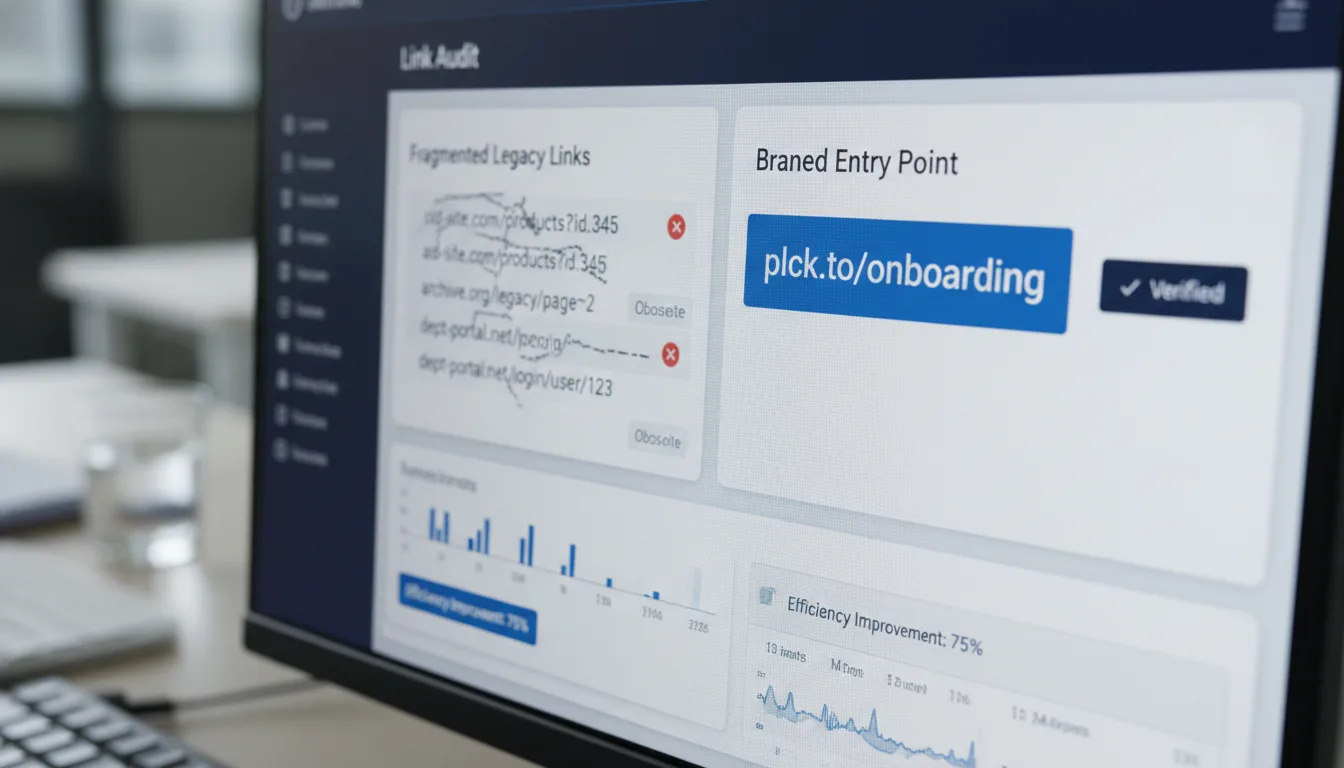
CloudSync wasn't alone in its struggles. Like many Series B SaaS companies on a rapid growth trajectory, they were grappling with a familiar set of challenges. Their marketing stack was, to put it mildly, fragmented. You know the drill: the CRM was spitting out one kind of tracking link, the support desk relied on another, and the social media team? Oh, they were happily using a grab-bag of free, generic link shorteners. This chaotic approach led to three glaring operational failures, creating cracks in their user journey where prospects could easily slip through.
- Brand Dilution: Instead of seeing something recognizable and trustworthy, users encountered links like
generic-tracker.com/u/88291. This wasn't just unsightly; it actively undermined their brand. Without branding, click-through rates (CTR) naturally suffered because these links failed to reinforce CloudSync's domain authority and professionalism. - Link Rigidity (The "Hard-Code" Headache): Here's a common pain point: CloudSync was constantly updating its help center architecture. What happened next? Thousands of hard-coded links sprinkled throughout PDF guides, archived emails, and old blog posts suddenly led to dead ends – dreaded 404 errors. The destination URL had changed, but those distributed short links were static, uneditable, and completely broken. Talk about frustrating for users and a nightmare for support teams!
- Attribution Blindness: Sure, CloudSync could tell you how many clicks their links received. That's the easy part. But they desperately lacked granular data on the context of those clicks. For instance, they couldn't easily segment mobile users from desktop users directly from the link level. This meant they couldn't serve appropriate app store redirects without a lot of guesswork, leading to missed opportunities and fuzzy analytics.
What was the cumulative effect of all this chaos? You guessed it: a seriously leaky funnel. Users were clicking but getting lost in the digital wilderness, or worse, they weren't clicking at all because those suspicious-looking URLs felt like a gamble. It's a problem many companies face, and it's a silent killer of conversions.
"We realized our links were the only part of our brand experience we weren't optimizing. We were optimizing pixels and copy, but ignoring the infrastructure that connected them."
The Game Changer: Embracing Centralized Link Governance
Enough was enough. To truly tackle these glaring inefficiencies head-on, CloudSync made a pivotal decision: they adopted a centralized link management strategy. Their vision was clear: URLs shouldn't be treated as static, one-and-done strings; they needed to be dynamic, living assets. This ambitious goal meant they needed a robust platform that could offer custom branded domains, incredibly flexible, editable destination paths, and deep, actionable analytics. It was time for a serious upgrade.
Strategic Pillars of Implementation: Building a Solid Foundation
The CloudSync team didn't just jump in blind. They meticulously defined three core strategic pillars to guide their entire new URL strategy. These pillars became their North Star, ensuring every decision aligned with their overarching goals for improved user experience and data integrity.
- Trust & Verification: This was non-negotiable. Every single link had to utilize a custom branded domain. Think
planck.to/featureinstead of some random string. This simple change was crucial for assuring users they were staying firmly within the trusted CloudSync ecosystem, boosting confidence with every click. - Agility: The team recognized the "hard-code" problem as a critical flaw. Their solution? The back-half of the link (what we call the "slug") needed to be completely decoupled from the actual destination URL. This ingenious approach meant they could change the destination of a link at any time without breaking the public-facing short link, creating truly evergreen resources.
- Intelligence: Beyond just tracking clicks, CloudSync wanted to understand the "why." Every link needed to effectively pass UTM parameters and, crucially, gather device-level data. This rich information would then directly inform product teams about user environments, leading to smarter, more tailored experiences.
From Chaos to Cohesion: CloudSync's Implementation Journey
When it came to choosing the right tool, CloudSync went with a platform known for its robust API capabilities and unwavering focus on enterprise reliability: Planck.to. This wasn't just about picking a tool; it was about selecting a partner for their centralized link management infrastructure. The implementation process itself was thoughtfully executed in three distinct phases, making sure to prioritize the highest-impact touchpoints first for maximum immediate return.
Phase 1: Setting the Stage with Domain Configuration and Onboarding
The very first step was fundamental: configuring a dedicated short domain that would serve as the rock-solid foundation for all their external communications. Instead of clinging to their main application domain, which could be quite lengthy and unwieldy, they wisely configured planck.to to expertly handle all their redirected traffic. This brilliant move kept their links wonderfully short for quick-tap channels like SMS and social media, all while proudly retaining their strong brand identity. No more cryptic strings!
Next up, the marketing team got to work, meticulously rewriting their entire automated onboarding sequence. Before, that crucial "Activate Account" button relied on a clunky, raw CRM tracking link. Now, it was replaced with a beautifully clean, instantly readable, and confidence-inspiring structure:
Old Link: email-service.net/track/click?u=8823&id=9928&dest=...
New Link: planck.to/activate-account
When you're rolling out branded short links, especially in email campaigns, don't forget the vital step of ensuring your SSL certificates are correctly provisioned for that short domain. Modern email clients are getting really good at filtering out (or outright blocking) non-HTTPS links, so make sure your links are secure!
Phase 2: Building an "Evergreen" Support Infrastructure
The Customer Success team, ever focused on user experience, embarked on a crucial audit of their PDF documentation and comprehensive knowledge base. They zeroed in on the top 50 most-referenced help articles – the ones users were constantly seeking out. Instead of directly linking to their Help Center URLs, which were prone to changing every time the platform migrated vendors or updated its structure, they ingeniously created permanent pointers using Planck.to.
Here’s a fantastic example: the "API Documentation" link embedded in their developer PDF was confidently set to planck.to/api-docs. Six months later, when CloudSync made the strategic move of relocating their documentation from a sub-folder to an entirely new subdomain, what happened? No broken links, no frantic updates! They simply logged into their dashboard and updated the destination URL in Planck.to. The thousands of PDFs already downloaded by users continued to work perfectly, seamlessly redirecting to the new location instantly. Talk about future-proofing!
Phase 3: Mastering Contextual Routing for Seamless Experiences
When it was time for their much-anticipated mobile application launch, CloudSync faced a common dilemma: how to effectively direct users to the correct app store. They needed a single, elegant link that would intelligently send iOS users straight to the Apple App Store and Android users directly to the Google Play Store. This is where advanced link management features really shone!
Leveraging these capabilities, they crafted a single, streamlined entry point: planck.to/get-cloudsync. The platform, with its clever detection of the user's operating system (via their User-Agent), automatically routed them to the correct store. This brilliant strategy completely eliminated the need to clutter social media bios or marketing materials with multiple "Download for iOS" and "Download for Android" links. It streamlined the visual presentation, significantly reduced decision fatigue for users, and made the download process incredibly smooth. What a win!
The Proof Is In The Pudding: Quantitative and Qualitative Impact
So, what happened after all this strategic effort? After a solid 90 days of implementation, CloudSync didn't just pat themselves on the back. They diligently conducted a thorough post-mortem analysis to quantify the real-world impact of their sophisticated URL management strategy. And the data? It was crystal clear, revealing significant, measurable improvements across several key SaaS metrics. Let's dig into the numbers!
Tangible Metric Uplift: Beyond Just Impressions
- A Stunning 34% Increase in Email CTR: This is huge! Branded links, like those using
planck.to, dramatically outperformed generic tracking strings. The psychological assurance of seeing the familiar brand name directly in the URL instantly reduced user friction and hesitation, leading to more confident clicks. - A Solid 22% Reduction in 404 Support Tickets: Remember those broken links? By intelligently using editable destination links across all their documentation, CloudSync virtually eradicated the infuriating issue of dead ends. This wasn't just about happy users; it freed up their valuable support agents to tackle complex technical queries, rather than wasting time on simple navigation issues.
- A Notable 15% Improvement in Attribution Accuracy: For any marketing team, fuzzy attribution is a nightmare. By enforcing strict, consistent UTM parameters appended to their short links, the CloudSync marketing team successfully recovered crucial data that was previously lost to the dreaded "Direct/None" traffic sources in Google Analytics. This meant far clearer insights and more effective budget allocation.
The cherry on top? CloudSync was able to directly attribute a significant 4% increase in their overall trial-to-paid conversion rate specifically to the streamlined user journey facilitated by smart routing and mobile-optimized deep links. This isn't just theory; it's a direct impact on the bottom line!
Key Takeaways: Unlocking the Analytical Value of Every URL
The resounding success story of CloudSync isn't just an isolated incident; it perfectly illustrates a profound truth: link management isn't some trivial administrative chore you can pawn off on an intern. Oh no, it's a sophisticated, strategic layer deeply embedded within your entire technology stack. For all you SaaS leaders out there, several critical analytical takeaways emerge from this case study. Let's break down what truly matters.
1. You MUST Control the Asset Lifecycle
In our hyper-connected digital ecosystem, a link isn't just a string of characters; it's a valuable, dynamic asset. Think about it: if you can't edit the destination of a link you've distributed far and wide, you've essentially lost control over that asset. SaaS products are built on rapid iteration and constant evolution. Your connectivity layer, the very infrastructure that links your users to your ever-changing product, must be equally agile. Without this agility, you're not just risking user experience degradation; you're actively creating it.
2. Brand Consistency Isn't Just Visual; It's Recursive
We often talk about brand consistency in terms of logos, color palettes, and messaging. And yes, those are vital. But true brand consistency extends all the way to the browser's address bar. When a user hovers over a link, that little preview text should instantly reinforce your brand promise, not raise a red flag. Consistently using a custom, branded domain like planck.to across all your channels – SMS, email, social media, wherever – creates a powerful, recursive reinforcement of trust. It builds familiarity and professionalism with every interaction.
3. Demand Deeper Data Granularity
Generic analytics can tell you what happened. "X number of clicks." That's good, but it's not enough. Link-layer analytics, however, help you explain the crucial how and why. Imagine understanding that a surprising 60% of your B2B enterprise clicks are actually originating from mobile devices (a key insight uncovered in the CloudSync case). That kind of granular data might force you to completely redesign your landing page to be mobile-first, or to rethink your content strategy entirely. This is a critical insight that aggregate, high-level page-view data might completely obscure. Don't settle for surface-level stats!
Ready to Apply? Here's How to Conduct a Link Audit for Your SaaS
Feeling inspired by CloudSync's success? Excellent! To replicate their impressive results and bring this level of strategic clarity to your own organization, it's time to roll up your sleeves and perform a systematic "Link Audit." This isn't just busywork; it's a methodical process that involves meticulously mapping out every flow of traffic and, more importantly, pinpointing those insidious points of friction that are quietly costing you conversions and frustrating your users. Let's get started, shall we?
Step 1: Inventory Your Distribution Channels
First things first: you need a comprehensive list of every single channel where your links are currently being distributed. Think broadly! This includes transactional emails, all your marketing newsletters, your social media bios, those crucial SMS notifications, and certainly any downloadable assets like PDFs and whitepapers. Don't forget those internal documents that might have external links too! Get it all down.
Step 2: Identify "Rot" Risks (and Future-Proof Them!)
Now, go through that list and highlight all the areas where your destination URLs are likely to change in the future. These are your high-priority candidates for evergreen short links. Imagine having permanent links like planck.to/status-page or planck.to/latest-release. By abstracting the ultimate destination from the public-facing link, you essentially future-proof your distribution. No more 404 nightmares!
Step 3: Standardize Your Nomenclature (No More Wild West Links!)
This step is about bringing order to the chaos. Develop a clear, consistent naming convention for your link slugs – that's the "back-half" of your links. A sprawling, chaotic list of randomly generated links is virtually unmanageable, especially when you're trying to glean insights. Instead, embrace structured approaches like using /campaign-source or /channel-content (for example, /linkedin-webinar-q3). This discipline will keep your analytics dashboard tidy, organized, and infinitely more useful.
Whatever you do, please don't rely on those auto-generated, random strings often provided by basic shorteners (e.g., /x7z99a). Customizing the slug with something descriptive and branded dramatically increases your click-through rates because it sets clear user expectations about the content they're about to dive into. It's a simple change with a big impact!
Conclusion: Your Links Are Your Untapped Growth Lever
From an analytical vantage point, especially in the relentless pursuit of SaaS growth, every single percentage point of conversion optimization is like adding compound interest to your revenue scaling. While it's often overlooked, and sometimes even dismissed as a mere technicality, the strategic management of your URLs actually represents an incredibly significant lever for boosting operational efficiency and fortifying your brand's integrity. It's truly an untapped powerhouse.
As the CloudSync case study so powerfully demonstrates, the transformation from a chaotic, generic linking strategy to a meticulously structured, branded approach—especially when powered by robust platforms like Planck.to—yields tangible, undeniable results. It acts as a digital shield, safeguarding your user journey against frustrating broken paths and dead ends. It provides you with deeper, more actionable intelligence into intricate user behavior. And ultimately, and perhaps most importantly, it relentlessly reinforces the invaluable trust that's absolutely essential to closing those critical enterprise deals. In an industry where trust isn't just a buzzword but the very currency of success, how you manage your links speaks volumes about your company, as much as the cutting-edge software you meticulously build.
Ready to get started?
Join thousands of users who are already using our platform to manage their links efficiently.
Create Your Free Account