Your Links: With & Without URL Shortening - See the Impact!
Ready to get started?
Join thousands of users who are already using our platform to manage their links efficiently.
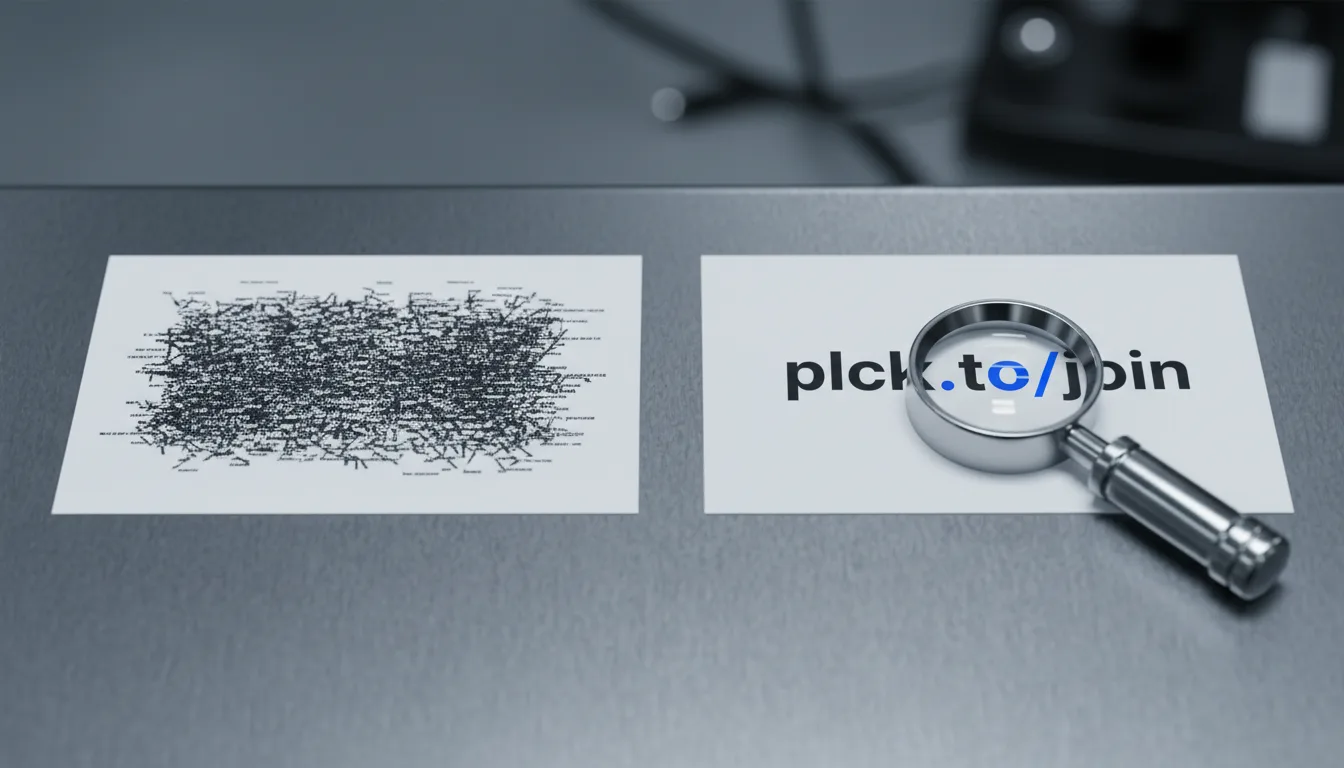
Create Your Free AccountLet’s be honest for a second, shall we? You’ve definitely been there. You’re scrolling through your feed, opening an email, or maybe even reading a text message, and boom – there it is: a link that looks like a cat had a wild party on your keyboard. It’s an absolute digital monster, sprawling across three lines, jammed with question marks, percentages, and a chaotic string of random characters. Your gut instinct screams, "Suspicious!"
What’s your immediate reaction? Probably a cocktail of hesitation and dread, right? "Is this spam? Is it a virus? Will my phone spontaneously combust if I dare click it?" It's a universal experience, and it's a huge problem for anyone trying to build trust online.
Now, picture this alternative: you receive a link that's neat, tidy, and frankly, beautiful. It’s short, it’s clear, and it tells you exactly what to expect before you even make a move. This isn't just a minor difference in character count; it's a profound shift in human psychology. In our fast-paced digital world, the way you present your links is akin to offering a firm handshake and making confident eye contact. It’s the first impression, the instant trust-builder, long before a single word of your actual content is consumed.
Today, we’re not just scratching the surface; we're diving deep into a comprehensive, side-by-side showdown of your online presence with and without the power of URL shortening. We’re going beyond mere aesthetics here. We're talking about tangible impacts on your data analytics, your brand's reputation, the deliverability of your messages, and ultimately, your all-important click-through rates. By the time you reach the end of this post, you'll have a crystal-clear understanding of why intelligently managing your links isn't just a good idea, it’s one of the highest-ROI activities you can undertake to supercharge your digital presence.
Unpacking the Basics: The Anatomy of a Digital Bridge
Before we get into the nitty-gritty of the comparison, let's quickly define what we're actually dealing with. Have you ever wondered why some links end up looking so… well, ugly? There's a reason, and it's usually tied to functionality rather than malicious intent (though scammers certainly exploit it!).
A "raw" or long URL is a complex beast. It typically includes the protocol (like https://), the domain name (your website address), the specific path (think folders and subfolders on a computer), and then, often, a series of "query parameters." These parameters are absolutely critical for digital marketers. They're the secret sauce that tells your analytics tools where a visitor came from, what campaign they interacted with, or even what content they were looking at before clicking. Without them, understanding your audience and the effectiveness of your campaigns would be like trying to navigate in the dark. But here’s the rub: these essential tracking codes are also the main culprits behind those monstrous, user-unfriendly links.
For most digital marketers, sharing a truly "clean" link is practically impossible because they absolutely need those tracking codes (like UTM parameters) attached to the end of the URL. These codes are vital for measuring campaign success and understanding user behavior. URL shortening acts as the perfect bridge, allowing you to retain all that precious tracking data without overwhelming or, frankly, scaring your users with an intimidatingly long link.
On the other side of the coin, a shortened URL takes that massive, data-rich string of characters and gracefully condenses it. It redirects traffic through a much shorter, often custom domain, something sleek like planck.to. What you get is a clean, appealing mask that hides all the complex, crucial data underneath, ensuring both user experience and data integrity. It's truly the best of both worlds!
The Ultimate Showdown: Your Digital Life With vs. Without Shortened Links
Alright, let’s get down to brass tacks. We're going to break this comparison into the critical categories that genuinely impact your success and, more importantly, your bottom line. Think of it as a clear roadmap to understanding the power you're either harnessing or leaving on the table: Aesthetics, Analytics, and Shareability (with a dash of print media magic!).
1. Aesthetics and That All-Important Trust Factor
Without URL Shortening: The Digital Clutter Chaos
Imagine you're crafting a beautiful social media post, a compelling email, or even an important document. You paste in your raw, long link, and what happens? It immediately erupts into a visual mess. It might wrap clumsily across two or three lines, completely disrupting the elegant flow of your text. And here’s the real kicker: if that lengthy URL gets cut off or awkwardly broken by email formatting or a platform's character limit, it can become entirely unclickable. That’s right, a "dead link." All your effort, all your carefully crafted content, leading to nowhere. It’s a sure-fire way to frustrate users and dilute your message.
"Long, complex URLs often trigger immediate suspicion in the mind of the average consumer, who's constantly on guard against phishing scams and malware. This digital clutter doesn't just look bad; it actively kills conversion rates by eroding trust before the user even has a chance to engage."
With URL Shortening: Polished Professionalism and Instant Credibility
Now, let's flip the script. Instead of a chaotic string, you present a concise, branded asset. Think about the immediate visual appeal when a user sees something like planck.to/summer-sale. It’s clean. It’s intentional. It speaks volumes about your attention to detail and professionalism. It subtly communicates that you care enough about the user experience to tidy up your digital footprint. This tiny change in format instantly builds credibility and lowers the psychological barrier to clicking, making your content far more inviting.
2. The Data Black Box vs. Total Clarity: Navigating Your Digital Campaigns
For anyone serious about growing a brand, a business, or even just a personal platform, this is arguably the most critical distinction. Are you operating in the dark, or are you equipped with a flashlight and a map?
Without URL Shortening: Flying Blind in the Digital Void
When you share a raw, unshortened link, you're essentially launching your valuable traffic into a vast, unmonitored void. Unless you have highly sophisticated, granular analytics meticulously installed and configured on the destination site (and even then, there are blind spots), you’ll have precious little idea of what actually happens after the click. Did people even click it? Where did they originate from? Was it on a mobile device or a desktop computer? You’re flying completely blind, unable to optimize or even truly understand the performance of your campaigns. How can you improve if you don't know what's working (or isn't)?
With URL Shortening: Unlocking a World of Actionable Intelligence
This is where the magic truly happens! Utilizing a robust platform like Planck.to transforms what appears to be a simple link into an incredibly powerful data-gathering machine. Even before your user fully lands on the destination page, the link manager meticulously captures a wealth of vital information. This isn't just vanity metrics; this is actionable intelligence that can redefine your marketing strategy:
- Click-Through Rate (CTR): Get an exact count of how many people engaged with your content. Understand what headlines, images, or calls-to-action resonate most.
- Geographic Data: Discover if your clicks are pouring in from bustling New York, historic London, or vibrant Tokyo. This insight can help you tailor content, target ads, and even plan events.
- Device Type: Imagine knowing that 80% of your users are accessing your links on Android devices versus iOS, or vice-versa. This single piece of data can dramatically alter your content formatting, ad targeting, and overall marketing strategy.
- Referrer Data: Pinpoint precisely where your audience found your link. Was it through Twitter, Facebook, an organic search result, or a direct email campaign? This helps you allocate resources to the channels that deliver the best returns.
One of the coolest benefits of using shortened links is the ability to effortlessly A/B test different channels and messages. Share one version of your shortened link on LinkedIn and a slightly tweaked version on Twitter (both pointing to the same ultimate destination). Then, watch your analytics to see which audience is more engaged and which approach drives better results. It’s like having a built-in research team for every campaign!
3. Print Media & "Typability": Bridging the Digital-Physical Divide
Let's talk about connecting your offline efforts to your online presence. This is where long links truly reveal their fatal flaw.
Without URL Shortening: A Wasted Opportunity
Picture this: you've invested in sleek business cards, eye-catching flyers, or maybe even a massive billboard campaign. You want to direct people to your website, so you print a link. But if that link is something like https://www.mysite.com/products/categories/seasonal/2024?ref=flyer-promo-q4, let's be real: nobody—and I mean absolutely nobody—is going to painstakingly take out their phone, open a browser, and manually type that entire monstrosity in. You've essentially just poured your valuable print budget down the drain, because the bridge to your digital content is broken before anyone even tries to cross it.
With URL Shortening: Memorable, Measurable, and Malleable
Now, imagine printing planck.to/join or planck.to/new-app. It’s short, it’s memorable, and it’s incredibly easy to type into a browser. It fits neatly on a business card, a flyer, or even a billboard without demanding a magnifying glass. The best part? If you're using dynamic links, you can change the destination of that link later without having to reprint all your marketing materials. Your physical assets remain relevant and functional, always pointing to your latest and greatest content – how cool is that for flexibility and cost savings?
Pros and Cons: A Balanced Perspective on Link Management
To truly give you the full picture, we've got to play fair and look at both sides of the coin. While I'm clearly a huge proponent of smart link management, it's essential to understand the nuances and weigh the benefits against any potential drawbacks. No tool is a magic bullet, and understanding its limitations is just as important as knowing its strengths.
Scenario A: Sticking with the "Raw Link" Approach
The Pros:
- Ultimate Transparency: There's no hiding where the user is going. They see the exact domain name in the URL, which can offer a sense of security and clarity, especially for highly sensitive content or regulated industries. There are no surprises, which some users really appreciate.
- Perceived Permanence: The link directly points to your website. This means its longevity is tied solely to your site being live, rather than relying on a third-party shortening service. If your website is up, the link works – simple as that.
The Cons:
- Aesthetics Are a Nightmare: Let's be blunt: long links are ugly. They disrupt graphic design, make emails look cluttered, and can seriously detract from the professionalism of your content. Visual appeal matters, and long URLs often kill it.
- Character Limits Become a Real Problem: In environments like SMS marketing or social media bios, every single character counts. A monstrously long URL eats up valuable space, forcing you to cut down on your actual message, or worse, split your message into multiple, costly segments.
- Absolutely No Editability: This is a silent killer. Imagine sending out a mass email with a raw, hard-coded link only to discover a typo in the URL, or worse, that the destination page has moved. Once that email is sent, there’s no going back. The link is dead, your campaign is compromised, and your reputation takes a hit. It’s a permanent mistake in a rapidly changing digital landscape.
Scenario B: Embracing the "Shortened Link" Approach
The Pros:
- Advanced, Granular Analytics: As we discussed, you gain unparalleled insight. Track every single click, understand device types, pinpoint geographic locations, and see referrer data. This robust data empowers you to make smarter, data-driven decisions.
- Enhanced Brand Control & Consistency: Custom slugs (the memorable part after the slash, like planck.to/your-product) not only reinforce your message but also your brand identity. It makes your links a seamless extension of your overall branding efforts.
- Powerful Retargeting Opportunities: Many advanced link shortening tools even allow you to add retargeting pixels to the intermediate redirect link. This means you can build custom audiences of everyone who clicked your link, even before they fully load your destination page, opening up incredibly powerful advertising possibilities.
- Incredible Editability & Flexibility: This is a game-changer! If you're using a smart platform like Planck.to, you can actually change the destination URL behind a short link *after* you've already shared it. Made a typo? Page moved? No problem! Just update the target URL in your dashboard, and your existing short link instantly points to the correct place. This saves you from the embarrassment, cost, and reputation damage of broken links.
The Cons:
- Trust Dependency on the Shortening Service: Since the user isn't seeing your direct domain, they're implicitly trusting the shortened link's domain. This is precisely why choosing a reputable, well-known, and consistent shortening domain (like planck.to) is absolutely vital. Random, unfamiliar short domains can still raise red flags, negating some of the trust benefits.
To really knock out that "trust dependency" con, always aim to customize the back-half of your shortened URL (what we call the "slug"). Seeing planck.to/official-rules is far more trustworthy, transparent, and enticing than seeing a generic, random string like planck.to/x97z3a. A custom slug gives users a hint of what's behind the click and reinforces your brand's professionalism.
Real-World Impact: Putting Link Management into Action
Theory is great, but let’s bring this home with some tangible, everyday examples. How does this play out in your actual digital marketing efforts? You might be surprised by just how significant the differences are.
Example 1: The High-Stakes SMS Campaign
You're running a killer flash sale, and time is of the essence! You want to send a text message to your most loyal VIP customers, urging them to shop now.
Without Shortening: The Costly Clutter
"Hey VIPs! Our flash sale is LIVE right now! Don't miss out, click here: https://www.fashionbrand.com/collections/winter-sale?utm_source=sms&utm_medium=text&utm_campaign=flash2024&discount=20off to shop amazing deals!"
Result: Ugh. That link alone takes up a huge chunk of your precious SMS character limit, potentially forcing your message to split into two (or more!) segments. This not only makes it look incredibly messy and untrustworthy, but it also costs you double (or triple!) the money to send. Plus, who's going to click that? The visual friction is immense.
With Shortening: Punchy, Professional, and Profitable
"Hey VIPs! Our flash sale is LIVE! Shop amazing deals now: planck.to/flash-sale"
Result: Clean, incredibly punchy, and enticing! It fits perfectly within a single SMS segment, saving you money and maximizing impact. The best part? You can track exactly how many people clicked from that specific text message, giving you clear ROI data for your SMS marketing efforts. It's a win-win-win!
Example 2: The Ever-Changing Social Media Bio
On platforms like Instagram or TikTok, that single "link in bio" is a golden ticket. It's often the only direct pathway from your content to your website, so you need to make it count!
Without Shortening: The Manual, Uninsightful Grind
One week, you paste a link to your latest YouTube video. The next week, you swap it out for a link to your new blog post. The week after that, it's a product page. You're constantly updating, manually changing the link in your profile. And what do you get for all that effort? No historical data, no insights into which past links performed best, and a constant fear of messing up.
With Shortening: Set It and Forget It (with Data!)
Instead, you use a consistent, branded link like planck.to/bio. The magic here is that you can change where this link points in the background, within your link management dashboard, without ever having to touch your social media profile again! Want to promote your latest YouTube video this week? Update the destination. Next week, switch it to your blog post. Or, even better, you can point it to a "link in bio" landing page that dynamically updates. You maintain perfect brand consistency, save yourself endless hassle, and collect valuable click data along the way. It’s truly a hands-off, intelligent approach to social media marketing.
Smart Linking Strategies: Recommendations for Maximizing Your Impact
So, you’re convinced, right? Shortened links are the way to go! But it’s not just about blindly shortening every URL you encounter. To truly leverage this powerful tool, you need a strategy. Here are my top recommendations for making the switch effectively and seeing real results:
-
Always Customize Your Slug (If Possible!):
Seriously, this is a big one. Never, ever settle for a random string of characters (like /a7b9x) if you have the option to customize it. Tailoring your link to say something meaningful like planck.to/new-video, planck.to/signup-now, or planck.to/special-offer dramatically increases click-through rates. Why? Because it tells the user exactly what to expect, instantly building trust and relevance. -
Use Your Analytics to Inform and Iterate:
Don't just collect data and let it sit there! The whole point of advanced link management is to gain insights. Dive into your click data. If you notice your links consistently get more engagement on Tuesday mornings, schedule your most important posts for Tuesday mornings. If your analytics reveal that 70% of your clicks are coming from mobile devices, ensure your destination site is flawlessly mobile-optimized. Use this feedback loop to continuously refine and optimize your marketing efforts. -
Maintain Consistency Across Channels:
Choose a consistent, reputable domain for your shortened links, like planck.to. By using the same trusted base domain for all your shared content, you build brand recognition and trust over time. Your audience will begin to recognize the structure and associate it with your quality content, creating a seamless and professional experience every single time they encounter one of your links.
Wrapping It Up: Your Links, Your Legacy
At its core, the technical difference between a raw, long link and a beautifully shortened one might seem minuscule. After all, it’s just a redirect happening behind the scenes, right? But as we've explored today, the real-world impact on your brand perception, your invaluable marketing data, and the overall user experience is nothing short of massive.
Consider this: without intelligent URL shortening, you're essentially shouting into a vast digital void, relying on messy, intimidating, and untrackable URLs. You're losing out on data, eroding trust, and making it harder for your audience to connect with you.
However, with smart URL shortening, you're presenting a polished, professional image. You're building instant credibility, enhancing readability, and, most critically, gathering the precise intelligence you need to understand your audience, optimize your campaigns, and fuel your growth.
Your links aren't just pathways; they are the crucial bridges connecting your amazing content and your eager audience. It’s time to ensure those bridges are sturdy, impeccably clean, and inviting enough to encourage every single click. Make the switch, clean up those URLs, and start experiencing the tangible impact for yourself. Your digital presence will thank you for it!
Ready to get started?
Join thousands of users who are already using our platform to manage their links efficiently.
Create Your Free Account