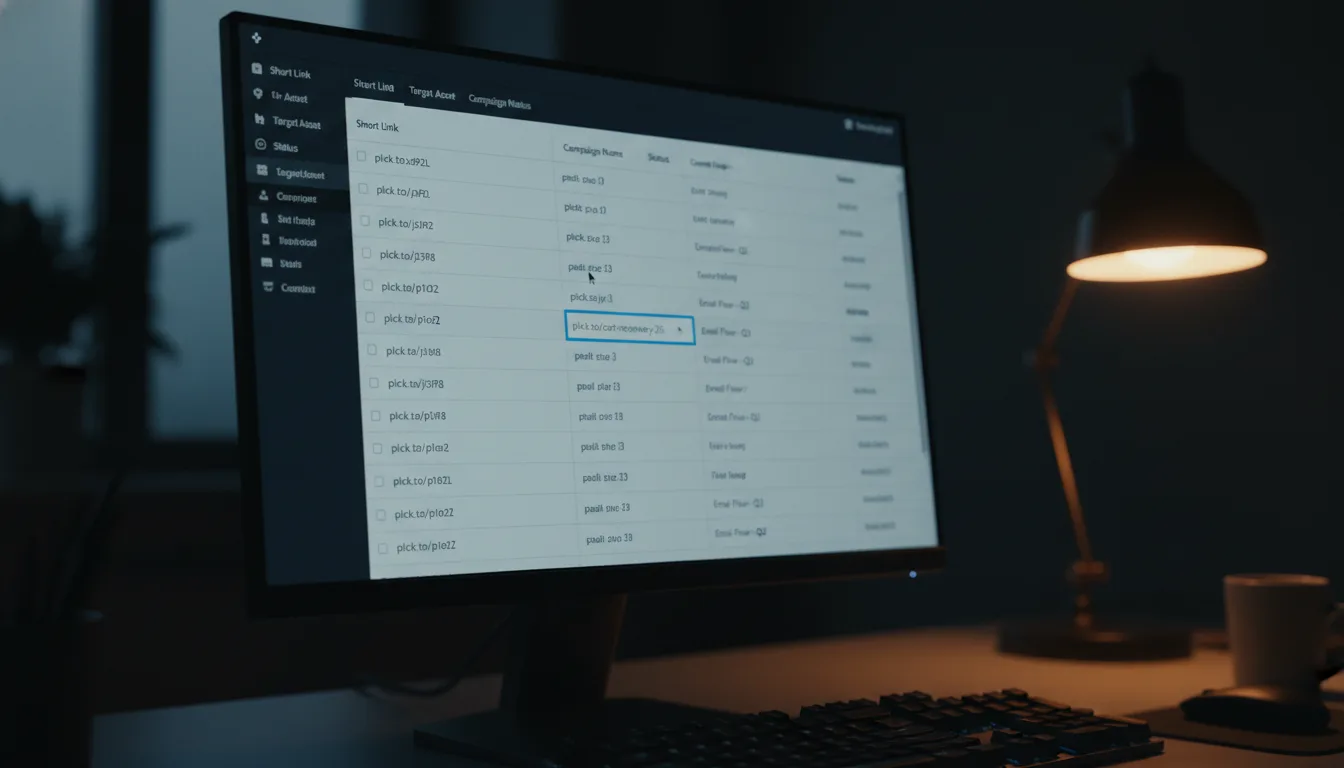
5 Advanced Ways Planck Link Expiration Secures Your Links

Ready to get started?
Join thousands of users who are already using our platform to manage their links efficiently.
Create Your Free Account5 Advanced Ways Link Expiration Secures Your Links and Boosts Campaign ROI
Let's be completely honest for a second. Every single time you hit 'share' on a link online, you're essentially laying down a digital marker – a footprint that, unless actively managed, could very well live on the internet forever. Sound a bit dramatic? Maybe, but it's true! We've all been there: you whip up an exclusive promotional offer, share a highly confidential document with a client, or launch a super time-sensitive webinar registration page. But here's the kicker: what truly happens to those links a week, a month, or even a year down the line?
Without a smart, proactive strategy, these aren't just old links; they become "zombie links." And trust me, these digital undead continue to shamble around, gobbling up clicks long after their intended purpose has expired. This leads to a whole host of headaches: frustrating 404 error pages that annoy your users, sensitive information potentially falling into the wrong hands, and perhaps most frustrating of all, valuable traffic leaking away that could have been converted into something meaningful elsewhere. Think about it: you wouldn't dream of leaving the front door to your business unlocked after hours, would you? So why are you leaving your digital entry points wide open indefinitely?
That's precisely why advanced Link Expiration isn't just a cool "nice-to-have" feature anymore—it's become an absolute, non-negotiable necessity for modern digital security, efficient campaign management, and creating a truly seamless user experience. By automatically retiring links based on specific, intelligent conditions and then rerouting that traffic dynamically, you gain total, iron-clad control over your precious digital assets. It's about taking back the reins.
In this comprehensive guide, we're going to push past the basics. If you've already mastered the art of shrinking a URL, fantastic! Now it's time to truly level up your game. We'll dive deep into how advanced link expiration works under the hood, revealing its clever mechanics. Then, we'll break down five expert-level strategies you can implement right now to fortify your links, safeguard your brand's reputation, and brilliantly transform what used to be dead-end traffic into exciting new opportunities.
So, What Exactly IS Advanced Link Expiration?
At its most fundamental, standard link expiration is pretty straightforward: you pick a date, and when that date rolls around, poof! The link simply stops working. But here's where things get interesting. When we talk about advanced link expiration, we're not just talking about a simple kill switch. Oh no, we're talking about an intelligent, dynamic workflow – a sophisticated system that actively manages user traffic and access rights based on real-time triggers and conditions. It's a game-changer.
Picture this: advanced link expiration literally transforms a static, ordinary URL into a powerful, programmable gateway. Instead of users hitting a frustrating, broken page when a link expires, that same link can dynamically route them to a completely custom destination. This routing decision can be based on precisely when or even how they interacted with the original link. The result? You create a fail-safe digital environment where you dictate exactly who gets access to your content, for precisely how long, and—crucially—what happens next if they miss the window. It's about precision control, not just deletion.
Advanced link expiration doesn't merely stop traffic in its tracks—it thoughtfully redirects it. By intelligently combining expiration triggers with smart fallback URLs, you completely eliminate those dreaded dead ends and ensure that every single click, no matter when it occurs, retains its full marketing or security value. It's about maximizing every interaction.
How Dynamic Link Expiration Works Under the Hood: The Inner Workings
Before we jump headfirst into the exciting strategies, it's really helpful to grasp the underlying mechanics. How does this magic actually happen? Well, advanced link management isn't just about simple redirects; it relies on a clever combination of predefined triggers and smart routing rules. When you create one of these sophisticated short links, you're not just pointing Point A to Point B; you're essentially building a conditional logic sequence that guides your users through their journey.
1. Time-Based Triggers: The Clock is Ticking
This is probably the most common and intuitive mechanism. You simply define a precise date and time—and yes, we're talking down to the minute! Every single time the link is clicked, the server actively checks the current timestamp against your predefined limit. If the current time has zoomed past that limit, the primary destination URL is blocked. Simple, effective, and perfectly automated. It's like setting a digital alarm clock for your content.
2. Click-Based Triggers (Volume Limits): The Gatekeeper
Instead of relying on a ticking clock, this ingenious mechanism relies on an internal counter. Think of it like a bouncer at an exclusive club. Every time a user successfully navigates through the link, the counter quietly increments. Once that counter hits your specified threshold (say, 100 clicks for an exclusive offer), the gate snaps shut, instantly denying further access—regardless of how much time has actually passed. This is pure, mathematical scarcity in action.
3. The Magic of Fallback Routing: No More Dead Ends!
And here, my friends, is truly where the magic happens and where advanced expiration shines! When either the time trigger or the click trigger is activated, the link doesn't just die a sad, sudden death. Instead, the routing server instantly and seamlessly references your pre-configured Fallback URL. This means the user isn't greeted with an ugly, trust-eroding error message. Nope! They're automatically and smoothly redirected to a secondary page of your choosing. It's a graceful exit strategy that turns potential frustration into continued engagement.
5 Advanced Ways Link Expiration Secures Your Campaigns and Boosts ROI
Now that we've peeled back the layers and understand the clever mechanics, let's explore how you can strategically deploy these powerful features. We're talking about securing your digital assets, diligently protecting your profit margins, and optimizing your audience's experience in ways you might not have even considered. Here are five expert-level use cases that will get your creative juices flowing:
1. Enforcing Absolute Digital Scarcity with Click Limits: The Golden Ticket
Digital scarcity is one of the most potent psychological triggers in all of marketing, isn't it? It makes people act! But let's face it, truly enforcing it online has always been incredibly difficult. If you announce that the "first 50 people get 50% off," how on earth do you actually stop the 51st person from claiming that discount code, especially if your special URL gets shared across various forums and social media? It's a real challenge.
The solution? By utilizing click-based link expiration, you can guarantee that your offer is mathematically capped. You might create a custom short link, something like planck.to/first-50-vip, and then set an absolute click limit of, say, 50. Once that 50th click registers, the link automatically expires. No more honor system, no more manual monitoring, just pure, enforced scarcity. It’s like having a digital bouncer who counts precisely.
Always, always pair a click-limit expiration with a highly relevant fallback URL. When the 51st person clicks, don't just send them to your generic homepage! Instead, redirect them to a waitlist page for the next offer or a secondary, perhaps slightly less generous, offer (like a 10% off consolation prize). This way, you still capture their lead data and keep them in your funnel!
2. Time-Bombing Sensitive B2B Deliverables: Protecting Your IP
If you're operating in the fast-paced world of B2B sales, consulting, or an agency, you're probably sending out dozens of proposals, pitch decks, and detailed pricing sheets every single month. More often than not, these crucial documents are hosted on cloud drives. The big problem? If you're sharing a direct drive link, that prospect effectively has access to your proprietary pricing, your methodologies, and your hard-won intellectual property... forever. That's a huge security risk!
Advanced link expiration allows you to cleverly "time-bomb" these deliverables. Instead of sharing the raw, permanent drive URL, you wrap it in a secure short link, something custom like planck.to/q4-proposal-acme. Then, you simply set it to expire in, say, exactly 14 days. This brilliant move achieves two incredibly important things: first, it subtly forces the prospect to review the document promptly (creating a gentle but effective sense of urgency), and second, it permanently revokes their access once the negotiation window has closed. Your intellectual property is protected, and you retain control, without having to remember to manually revoke access.
Many sales teams who've adopted time-limited links for their proposals have actually reported up to a 30% decrease in their average sales cycle duration! This isn't magic; it's simply because the built-in expiration creates a natural, undeniable deadline for the prospect to review and act. Urgency really works!
3. Intelligent Fallback Routing for Seamless UX: The Customer's Journey Matters
From a user experience standpoint, is there anything that damages brand trust faster than a jarring 404 error page? Probably not. Imagine a loyal customer clicks a link from a six-month-old email blast, eager to revisit something, only to be met with a broken page. What happens next? They're highly likely to bounce immediately and might even think twice before returning. A dead link is a brand killer.
"A dead link isn't just a dead end for your customer's journey; it's a missed opportunity to connect. Expired links with intelligent fallback routing transform that missed moment into a secondary, valuable conversion point."
This is where truly advanced users leverage expiration not just for security, but to manage traffic flow dynamically and intelligently. For instance, let's say you run a fantastic weekly live webinar. You can consistently use the exact same promotional link every single week (e.g., planck.to/live-masterclass). You then set that link to expire the minute the live broadcast concludes, with its fallback URL smoothly pointing directly to the on-demand recording. What's the genius here? Your audience gets exactly what they need, regardless of when they click the link, and your marketing team doesn't have to scramble to manually update dozens of social media bios, email campaigns, and website banners every single week. It's automation that truly serves your audience.
4. Securing Ephemeral Marketing Campaigns and Flash Sales: The Midnight Shield
Flash sales, by their very nature, are designed to be short, sharp, and explosive revenue generators. They're exciting! However, the operational headache of ensuring that all your promotional banners, affiliate links, and email CTAs are precisely deactivated at exactly midnight, or at the end of the sale, can become a total nightmare for your marketing and operations teams. The last thing you want is someone snagging a discount code hours after the sale ended, right?
By routing all your campaign traffic through smartly expiring links, you completely automate the shutdown process. No more frantic late-night checks! Let's imagine you launch a thrilling 24-hour Black Friday special using planck.to/bf-flash-sale. You configure this link to expire precisely at 11:59 PM. When the clock strikes midnight, that link instantly begins rerouting all stragglers to a pre-designed "Sale Ended" landing page. This page can gracefully invite them to join your newsletter for future events or explore other full-price products. The best part? Your team sleeps soundly, knowing the campaign is perfectly managed, and your inventory remains secure from late-comers trying to exploit old discount codes. Efficiency and security, all in one package.
5. Mitigating Unauthorized Link Sharing (The Hybrid Approach): Building a Fortress
One of the most persistent and frustrating security vulnerabilities for digital product creators, online course providers, and software companies is unauthorized link sharing. You know the scenario: you send a private beta access link to a carefully curated list of 100 trusted users, only to wake up the next morning and find it's been splashed across Reddit, leading to 5,000 completely unauthorized sign-ups. It's a massive breach of trust and a logistical nightmare.
The advanced security play here is a brilliant hybrid approach: combining rapid time expiration with a conservative click limit. This creates a multi-layered defense. You might generate a link, let's say planck.to/beta-invite-secure, that has a strict click limit of 120 (accounting for a few users potentially clicking twice or sharing with a single legitimate peer) AND a time expiration of, say, 48 hours. By utilizing both these parameters simultaneously, you effectively build a digital fortress around your valuable asset. Even if the link does unfortunately get leaked, these automated limits ensure the potential damage is physically contained and minimized, often before you even realize a leak has occurred. It’s like having an invisible, vigilant guard on duty 24/7.
The Tangible Benefits of Auto-Expiring Links: Why Bother?
You might be wondering, "Okay, this sounds cool, but why should I really invest the time and effort into setting up these advanced parameters?" That's a fair question! The truth is, the benefits extend far beyond simple link management. Implementing a strict, intelligent expiration policy across your organization delivers measurable, tangible ROI in several key areas. Let's break down some of the most impactful:
- Mitigating Security Risks: By consciously limiting the lifespan of a link, you drastically shrink the potential surface area for unauthorized access, prevent sensitive data leaks, and fend off malicious scraping bots. It's a proactive defense strategy against digital threats.
- Protecting Brand Reputation: Automatically routing expired traffic to custom, thoughtfully designed landing pages ensures your users never stumble upon frustrating dead ends or broken links. This commitment to a flawless user journey maintains a highly polished, professional, and trustworthy brand image. Nobody likes a 404, and your customers will thank you for avoiding them.
- Cleaning Up Analytics Data: Let's be honest, those "zombie links" we talked about earlier? They wreak havoc on your long-term analytics! By expiring campaigns precisely on time, you ensure your click data accurately reflects the actual window of your marketing efforts, providing a much clearer, undistorted picture. This leads to better, more informed strategic decisions down the road.
- Creating Authentic Urgency: This is a powerful psychological lever. When your audience learns, through consistent experience, that your links truly do expire and opportunities close, they are subtly trained to click faster and take immediate action on your future campaigns. It builds genuine anticipation and responsiveness.
- Boosting Operational Efficiency: Imagine automating the tedious process of turning off promotional links, updating webinar recordings, or revoking access to old documents. This frees up countless hours for your team, allowing them to focus on higher-value tasks rather than manual link babysitting.
Getting Started with Link Expiration in Planck.to: Your Control Panel
The good news? Transitioning from basic, static URLs to advanced, self-managing links isn't nearly as complicated as it sounds. In fact, it's incredibly straightforward when you're equipped with the right tools. Platforms like Planck.to are specifically designed to make this advanced configuration intuitive, fast, and completely accessible, requiring absolutely no coding knowledge on your part. It's about empowering you to take control.
Setting Up Your First Expiring Link: A Simple Process
When you're ready to secure your next crucial campaign or sensitive share, the process is delightfully simple. Just paste your long destination URL into the Planck.to dashboard, as you normally would. But here's the crucial next step: before you hit that button to generate your short link, navigate over to the advanced settings panel. Right there, you'll discover dedicated, clearly labeled fields for Link Expiration. This is where the magic begins! You can either input a specific calendar date and time (down to the minute!) or, if you prefer, establish a maximum click threshold. The choice is yours, based on your campaign's needs.
Customizing the Expired Destination: The Fail-Safe Route
This is arguably the most crucial step, so pay close attention! Directly below those expiration triggers, you'll be prompted to enter a fallback URL. Don't rush this! Take a moment to think carefully about where you want those late visitors to gracefully go. If it's a webinar link that just expired, point it directly to the replay page. If it was an exclusive product launch that ended, send them to a lead capture form for future announcements, or perhaps a different, evergreen product page. Once you've thoughtfully configured these settings, simply save your changes, and voilà! Your new dynamic link (something like planck.to/secure-launch) is ready to deploy securely, offering both protection and continued engagement.
Flexibility is key! The fantastic thing about using a platform like Planck.to is that you can always go back and fine-tune the expiration parameters or even update the fallback URL. Yes, you can do this even after the link has already been published and widely distributed to your audience. This gives you unparalleled control and adaptability.
Conclusion: It's Time to Take Back Control of Your Traffic and Digital Assets
In today's incredibly fast-paced and ever-evolving digital landscape, simply launching a campaign or sharing a sensitive asset without a clear, predefined exit strategy is, frankly, a massive risk. Every single link you create should genuinely have a defined lifecycle. By wholeheartedly embracing advanced link expiration features—things like precise click limits, strategic time-bombing, and intelligent fallback routing—you transform your links. They stop being static liabilities and become dynamic, secure, and incredibly smart assets that work for you, even when you're not actively managing them.
The days of being at the mercy of the internet's permanence are over. You are no longer just sending links into the void. Now, you dictate precisely who gets access, for exactly how long, and what their user journey looks like when that window of opportunity inevitably closes. Whether your primary goal is to enforce absolute digital scarcity for an irresistible flash sale, protect invaluable intellectual property during a critical B2B negotiation, or simply provide a flawless user experience by elegantly eliminating dead links, these advanced expiration controls hand you the ultimate oversight and peace of mind.
So, here's my challenge to you: start auditing your current active campaigns today. Seriously, take a look! Identify which of those "evergreen" links should, in reality, be temporary. Then, begin implementing intelligent expiration rules. I promise you, your security posture, your user experience, and the integrity of your analytics data will immediately thank you. It's time to stop just shortening links and start smartly managing their entire lifecycle.
Ready to get started?
Join thousands of users who are already using our platform to manage their links efficiently.
Create Your Free Account