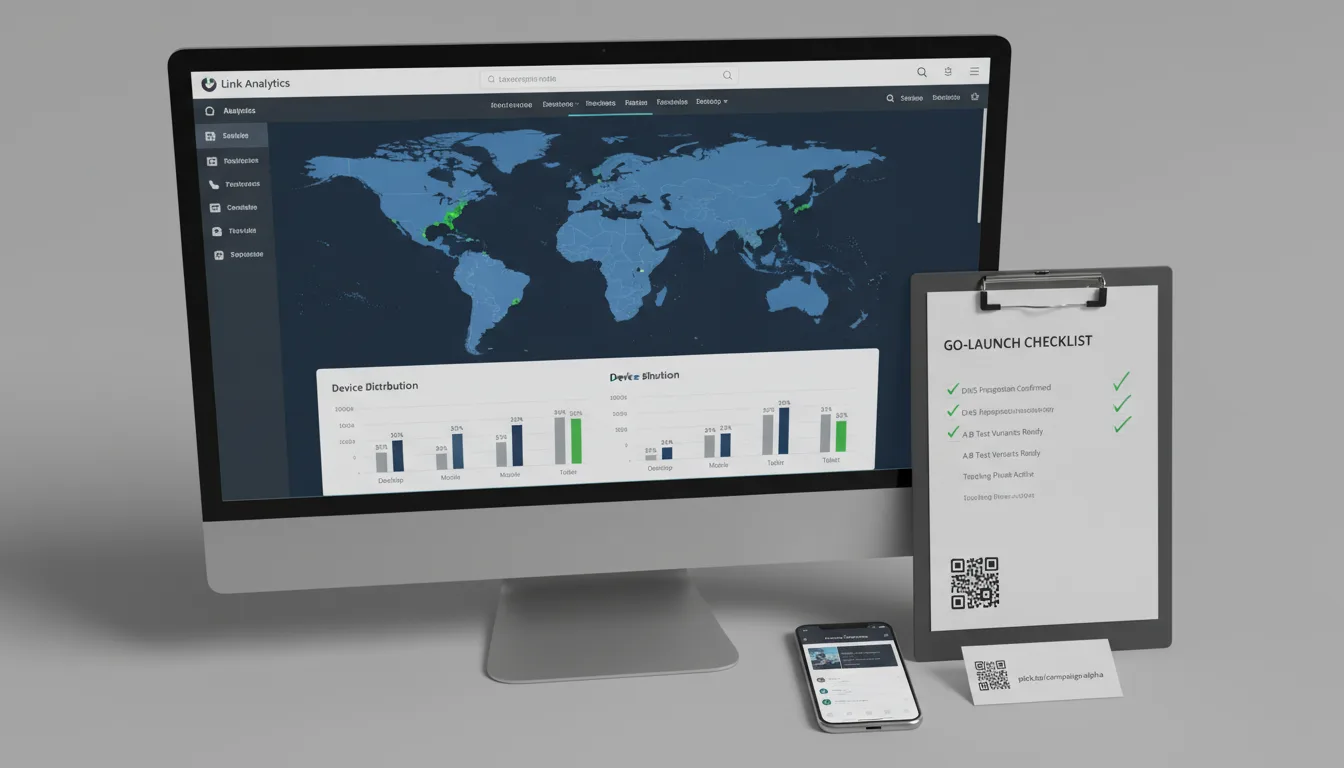
Accelerate Link Management: Top Planck Time-Saving Tips

Ready to get started?
Join thousands of users who are already using our platform to manage their links efficiently.
Create Your Free AccountThe Silent Time-Stealer: Why Your Link Management is Costing You Hours
Here's the thing about digital work: time is your most precious resource, right? We're all racing against the clock in digital marketing, content creation, and daily business operations. Yet, a surprising number of professionals are unknowingly leaking precious hours every single week, all because they're wrestling with messy, unorganized, and, let's be honest, often broken URLs. Whether you're launching a massive multi-channel marketing campaign, distributing crucial internal documents, or simply sharing resources with clients, how you handle your links can either be a supercharger for your workflow or a frustrating, energy-sapping bottleneck.Think back to your last big campaign launch. Did you find yourself painstakingly generating individual tracking links for every single channel? Remember that sinking feeling when an email blast went out, only for you to discover a typo in the destination URL after hitting send? Or perhaps you've spent what felt like an eternity digging through weeks of chat history, desperately trying to unearth that one specific link you shared with a partner? If any of these scenarios hit a little too close to home, then it's clear: your current link management strategy is quietly but consistently costing you valuable time and peace of mind. But don't worry, you're not alone, and there's a better way. This comprehensive guide isn't just about giving you a few tips; it's designed to fundamentally transform how you interact with URLs. We're going to dive deep into high-impact, actionable strategies that will streamline your workflow, automate those repetitive, soul-crushing tasks, and ensure that every single link you create works tirelessly *for* you. By implementing these insights, you'll reclaim hours of your workweek, dramatically reduce human error, and accelerate your overall digital operations. Imagine what you could do with all that extra time!"Efficiency means doing things right; effectiveness means doing the right things. In digital operations, a truly streamlined link management process helps you achieve both simultaneously, making your work smarter, not harder."
The Foundation: What Efficient Link Management Really Means
Before we jump into all the juicy time-saving tips, let's first get on the same page about what truly comprehensive Link Management actually involves. It's so much more than just making a long URL shorter, though that's certainly a nice perk! At its heart, it's about establishing a robust, scalable system for everything related to your digital gateways: creating them, organizing them, distributing them, and, critically, analyzing their performance. Think of your links as the arteries of your digital presence; you want them flowing smoothly and efficiently.Why Centralizing Your Digital Assets is a Game-Changer
Here's the deal: a fragmented link ecosystem is, by its very nature, a slow and inefficient one. Picture this: your social media team is tracking URLs one way, your email marketing team is using a completely different method, and your sales team is just sharing raw, unformatted links in their communications. Sound familiar? That's a recipe for chaos, confusion, and a whole lot of wasted time. Centralization isn't just a buzzword here; it's the absolute foundational step toward achieving true efficiency. By bringing all your URL generation, shortening, and tracking under one unified methodology and platform, you instantly eliminate the friction of cross-departmental communication. You create a single, undeniable source of truth for all your digital routing, ensuring everyone is on the same page and working with accurate, consistent data.Studies show that centralized link management can reduce the time spent searching for digital assets by an impressive up to 40%! When every team member knows exactly where and how links are generated and stored, collaborative friction virtually disappears, freeing everyone up to focus on higher-value tasks.
The True, Hidden Cost of Manual Workflows
Let's be blunt: manual URL management is a magnet for human error. We're all human, after all! Creating complex tracking links by hand, meticulously typing out long UTM parameters, and then copying/pasting them into endless spreadsheets might not feel like a massive chore for just one or two links. But when you scale that up – and in today's digital landscape, everything scales up – it becomes an absolute disaster waiting to happen. A single typo in a UTM parameter can corrupt your precious analytics data, leading to hours of forensic work in your reporting dashboard trying to untangle misattributed traffic. It's like trying to find a needle in a haystack, only the haystack is made of distorted data. Time-saving URL management, therefore, is largely about replacing these manual, error-prone, and painfully slow steps with smart, automated, and standardized processes. You deserve better than to spend your day wrestling with spreadsheets!Your Arsenal: Top Time-Saving Tips for URL Management
Alright, now for the good stuff! Let's explore the individual, highly effective strategies that are going to drastically reduce the time you spend managing links. The best part? This frees you up to focus on what truly matters: brilliant strategy, compelling content creation, and innovative campaigns.Tip 1: Standardize and Automate Your UTM Tagging
UTM parameters are the undeniable lifeblood of effective campaign tracking. They tell you where your traffic is coming from, which campaigns are performing best, and what's driving results. But here's the catch: they're incredibly tedious and prone to error when you write them manually. The most significant time-saver in this arena is a two-pronged attack: first, standardize your UTM taxonomy across your entire team, and second, utilize built-in link generators. Instead of laboriously typing out ?utm_source=facebook&utm_medium=social&utm_campaign=spring_sale every single time you need a new link, establish a crystal-clear naming convention. What does that mean? It means everyone uses "Facebook" (not "FB" or "facebook.com") as the source. When you leverage a modern link management platform, you can actually save these meticulously crafted parameters as presets. This incredible feature means that creating a fully trackable link, perfectly aligned with your analytics, takes just two clicks instead of a minute of typing and nerve-wracking triple-checking for spelling mistakes. Talk about efficiency!Don't skip this step! Create a standardized "UTM Matrix" document for your entire team. Define exactly what constitutes a 'source' versus a 'medium' versus a 'campaign'. This simple act prevents the incredibly time-consuming nightmare of cleaning up fragmented analytics data later on, where "FB," "Facebook," and "facebook.com" have all been tracked as separate, distinct sources. Your future self (and your analytics team) will thank you immensely.
Tip 2: Harness the Power of Bulk Link Creation
Let's imagine you're running a sprawling affiliate program with dozens of partners, or maybe you're launching a dynamic ad campaign with hundreds of creative variations. What about equipping a large sales team with personalized tracking links for each prospect? In these scenarios, creating links one by one isn't just inefficient; it's an immense, soul-crushing waste of time. This is where bulk creation becomes an absolute game-changer. Using powerful platforms like Planck.to, you can easily compile all your destination URLs and desired parameters into a simple CSV spreadsheet. Then, with a quick upload, the system instantly generates hundreds, or even thousands, of perfectly shortened, trackable links in mere seconds. It's magic! For example, instead of manually generating a unique link for 50 different influencer partners, you just upload your prepared list and instantly receive back an organized sheet of custom links. Imagine links like planck.to/partner-sarah and planck.to/partner-mike – all generated and ready to go with minimal effort on your part. Think of the hours saved!Tip 3: Implement Custom Link Slugs for Instant Recall and Recognition
Ever found yourself tearing your hair out, wasting a good 15 minutes digging through a messy spreadsheet or your link platform dashboard, just to find that one specific link you created last month? Chances are, it was something generic and forgettable like planck.to/x8J2qP. We've all been there! Here's a super simple, yet incredibly effective, solution: take an extra three seconds to create a Custom Slug. This is the memorable, human-readable back-half of your URL. Doing so proactively saves you minutes (or even hours) of frustrating search time in the future. Custom slugs transform your links from random strings of characters into intuitive, memorable assets. If you're launching a webinar in October, setting the link to something clear like planck.to/oct-webinar-2024 means you, your team, and even your audience can instantly recall and often type the link from memory. It's about making your links work harder for you, even before anyone clicks.Brands and teams that consistently use clear, descriptive custom slugs report a significant decrease in internal "link-hunting" requests. Think about it: team members can confidently guess or remember the URL structure without having to interrupt colleagues, comb through old messages, or search vast databases. That's a huge win for collaborative efficiency!
Tip 4: Utilize Dynamic Destination Routing – Your Digital Safety Net
Let's be real: mistakes happen. It's an inevitable part of fast-paced digital work. Imagine this all-too-common nightmare: a critical marketing email is sent out to 100,000 subscribers, but, through some oversight, the destination URL points to an out-of-stock product page, a broken 404 error, or even the wrong landing page entirely. In a traditional workflow, fixing this is catastrophic. You can't un-send an email, and you've effectively wasted the entire campaign's potential, alongside potentially damaging your brand's reputation. This is where dynamic link management truly shines and becomes your ultimate digital safety net. With this approach, your short URL (e.g., planck.to/flash-sale-promo) acts as a permanent, flexible gateway. If you realize your link is pointing to the wrong place, you simply log into your management dashboard and, with a few clicks, edit the destination URL. The short link itself remains exactly the same, but the traffic is instantly and seamlessly rerouted to the *correct* page. This one feature alone can save you hours of crisis management, prevent significant reputation damage, and recover potentially lost revenue. It's truly invaluable.Tip 5: Get Organized with Tags, Folders, and Workspaces
As your link library inevitably grows from a mere handful to dozens, hundreds, and eventually thousands, organization doesn't just become helpful – it becomes absolutely critical for maintaining efficiency. Think of your links in the same way you organize files on your computer; you wouldn't just dump everything into one giant folder, would you?- Folders: Use folders to group your links by major campaigns, by specific quarters, or by departments. For example, a folder named "Q3 Paid Social" or "Holiday Email Campaign 2024" makes finding relevant links a breeze.
- Tags: Implement versatile tags for cross-referencing and adding extra layers of context. You might tag links with "Video Content," "Evergreen Resource," "High-Converting CTA," or even specific product lines. This allows for incredibly flexible searching and reporting.
- Workspaces: If you're managing multiple brands or have highly siloed departments, workspaces are a godsend. They allow you to separate distinct link libraries, ensuring that team members only see and interact with the links relevant to their daily workflow, reducing clutter and preventing accidental edits.
Your Action Plan: Building a Time-Saving Link Workflow, Step-by-Step
Reading about efficiency is one thing, and it's certainly helpful. But putting it into actual practice? That's where the real, tangible value lies! Here's a clear, step-by-step implementation guide to help you overhaul your link management process and start saving precious time this very week. You've got this!Step 1: Audit Your Current Link Practices
Before you can build a faster, more robust system, you absolutely need to understand where your current process is slowing you down. Gather your key team members – those who regularly create, share, or manage links – and collectively identify the existing bottlenecks. Ask yourselves:- Are different people using different tools for link shortening and tracking?
- Are important links living in personal spreadsheets or scattered across various chat apps?
- How much time do we spend searching for links?
- How often do we encounter broken links or analytics attribution issues?
Step 2: Establish Your Link Hierarchy and Guidelines
Once you know your pain points, it's time to lay down the law – in a good way! Create a simple, clear, one-page internal document that outlines your new, standardized link management rules. This isn't about bureaucracy; it's about ensuring long-term efficiency by preventing messy data accumulation and inconsistent practices from ever cropping up again. This document should clearly define:- Exactly how custom slugs should be formatted (e.g., always lowercase, use dashes instead of spaces: planck.to/new-feature-release).
- Your standardized list of UTM parameters for your most common traffic sources and campaign types.
- Your agreed-upon folder structure that mirrors your campaign planning or departmental organization.
Remember, adoption is always easier when the rules are clear, concise, and easy to follow. A well-documented structure prevents "link clutter" and ensures that six months from now, your link dashboard remains as clean, organized, and easily searchable as it is on day one. Consistency is key to long-term time savings!
Step 3: Centralize and Train Your Team
Now it's time to bring everything together! Move all your URL operations onto a unified, dedicated platform like Planck.to. If necessary, take the time to import any legacy links you still need, and then set up your foundational workspaces according to your new guidelines. This ensures everyone is working from the same playbook and the same system. Once your new environment is set up and sparkling, host a brief, focused 15-minute training session with your team. Keep it short, sweet, and to the point. Show them the specific shortcuts and workflows you've established:- How to use a saved UTM preset for lightning-fast link creation.
- How to edit a destination URL without ever changing the short link.
- How to properly tag and categorize their newly created assets.
The proof is in the productivity! Teams that make the leap from fragmented, manual spreadsheet processes to a centralized, tag-based system consistently report saving a remarkable 2 to 3 hours per week on link generation and campaign reporting tasks alone. That's real, tangible time you can re-invest!
Conclusion: Reclaiming Your Time for the Work That Truly Matters
Let's face it: link management is rarely the most glamorous or exciting part of a digital professional's job description. But here's the undeniable truth: it is absolutely the essential connective tissue of every single online campaign, every piece of communication, and every conversion pathway you build. When left unoptimized and ignored, it silently, stealthily drains your most valuable asset – your time – through endless manual generation, tedious searching, and reactive crisis management. It's a productivity vampire, sucking away hours you could be using for so much more. By choosing to treat your URLs not as disposable strings of text, but as valuable, managed digital assets, you unlock a completely new level of operational efficiency and strategic agility. Standardizing your UTMs, embracing the incredible power of bulk creation tools, utilizing memorable custom slugs, leveraging dynamic routing for peace of mind, and maintaining strict organizational hygiene aren't just minor tweaks to your workflow. Oh no, these are powerful strategies that pay compound interest on your productivity, delivering returns far beyond the initial effort. Think about it: the time you save by skipping manual link creation or avoiding a painful, hours-long analytics cleanup can be immediately reinvested into what truly matters for your business and your career. Imagine having more time for deep analysis of campaign performance, for crafting even better, more persuasive messaging, or for truly driving your overall digital strategy forward with confidence. Implement these time-saving tips today, establish a clear and consistent framework for your team, and then watch in satisfaction as your daily digital workflow becomes faster, smoother, and vastly more effective. Your future, more productive self will thank you for it!Ready to get started?
Join thousands of users who are already using our platform to manage their links efficiently.
Create Your Free Account