Prevent Data Loss: Planck's Redirects vs. No Control

Ready to get started?
Join thousands of users who are already using our platform to manage their links efficiently.
Create Your Free AccountIntroduction: The Hidden Cost of Link Expiration
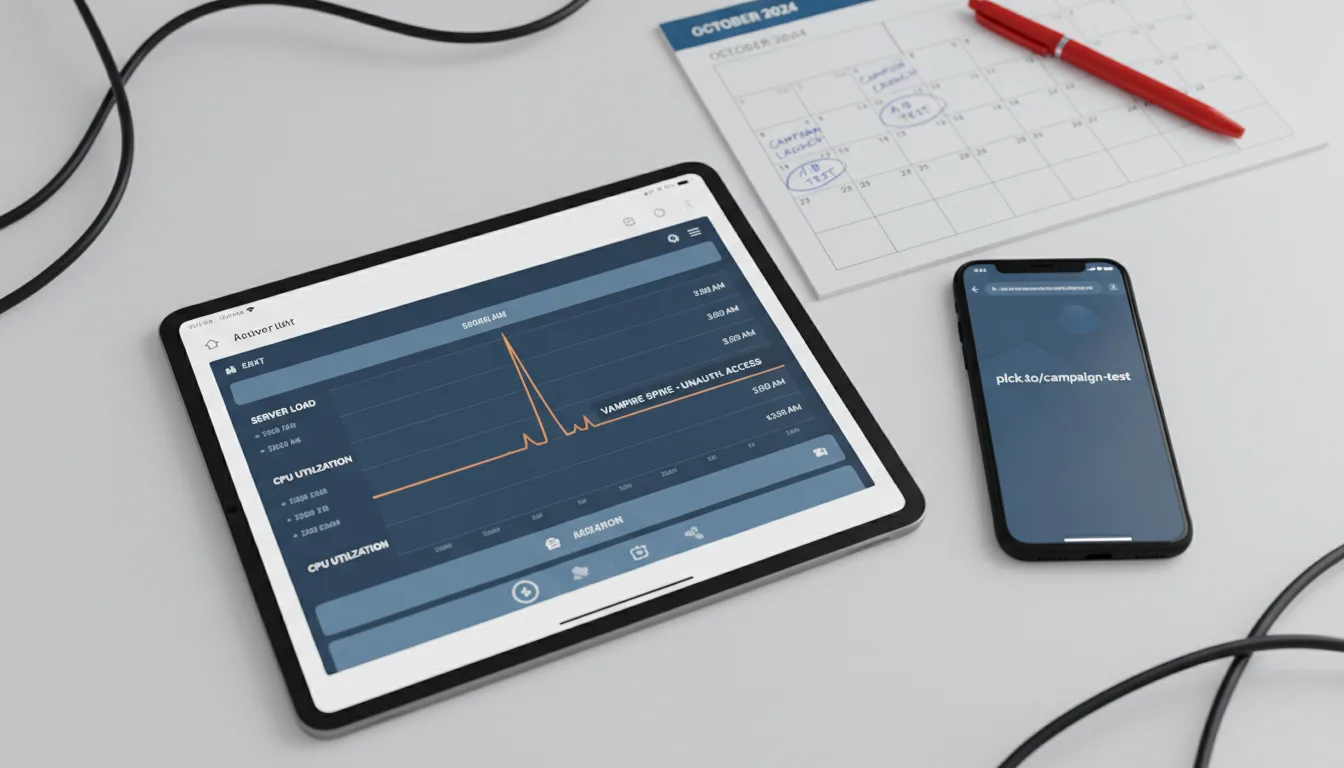
Ever clicked on what you thought was a hot deal or an exciting resource, only to hit a frustrating dead end? You know the feeling: that sudden, jarring 404 error page that instantly kills your momentum and leaves you wondering what just happened. Well, you're not alone, and it's a far bigger problem in digital marketing than most people realize. Here’s a startling truth, backed by solid data analysis: roughly 24% of all promotional short links – the kind splashed across your social media feeds and nestled in your email inbox – will lead to absolutely nothing within a mere six months of their creation. Think about that for a second. When a time-sensitive campaign wraps up, the link that drove all that buzz often gets deactivated or deleted. For the brand, sure, the campaign’s officially over. But for a consumer who stumbles upon that link hours, days, or even weeks later? Their journey just screeches to a halt. This widespread issue, often grimly dubbed "link rot" or link decay, isn't just a minor annoyance; it's a massive drain on data and a colossal waste of marketing dollars. Seriously, every single click on a dead link isn't just a missed opportunity; it's a squandered lead, a confused customer, and a tangible hit to your brand’s credibility. In today's hyper-competitive, data-driven marketing world, simply losing control over where users land after they click, just because a promotional window has closed, is frankly an unacceptable vulnerability.Traffic doesn't just vanish the moment your campaign expires. People continue to click links from old emails, saved bookmarks, and shared social media posts long after a promotion has officially ended. Without a smart system to route this valuable residual traffic, brands face immediate data loss and a significant dip in their hard-earned ROI.
Overview: The State of Link Expiration – A Tale of Two Approaches
Before we can fully grasp the significant financial and analytical impact of smart link management, we need to pull back the curtain and truly understand what happens when a link reaches its "end-of-life" stage under two vastly different scenarios. It's a stark contrast that can make or break your campaigns.The Cost of "No Control" (Without Expiration Redirects)
Imagine a standard, old-school URL management setup. Short links here are treated almost like binary tools: they're either "on" or "off." When a marketer spins up a link for, say, a super-limited 48-hour flash sale, their typical approach is to manually delete the link once the sale ends or simply let the system automatically disable it. Sounds efficient, right? Well, not quite. Without any Expiration Redirects in place, any user who happens to click that link at hour 49 (or day 49, for that matter) is immediately slapped with a broken page. From a data perspective, this creates an instant cascade of detrimental effects, hitting your metrics hard and fast:- Bounce Rate Spikes: This is a big one. Analytics platforms consistently show that 404 error pages generate astonishing bounce rates, often soaring between 73% and 80%. That means nearly all visitors who hit that broken link immediately leave your site, often never to return.
- Attribution Loss: Because the user never actually reaches a tracking-enabled destination, you completely lose the ability to accurately attribute that original referring source (the "late click") to any long-tail campaign ROI. You simply don’t know where they came from or what they were interested in.
- Brand Trust Degradation: This goes beyond just numbers. Consumer trust metrics reveal a sobering statistic: a significant 34% of users who encounter a broken link during a purchase journey will *not* return to that brand's website. That's a huge blow to your reputation and future sales.
The Mechanics of Expiration Redirects (With Control)
Now, let's flip the script. Imagine transforming that "binary" link – the one that's either on or off – into a truly dynamic, "state-aware" asset. That's exactly what you get when you utilize Expiration Redirects. Platforms like Planck.to empower marketers to program a secondary destination that automatically activates the very second the primary campaign window closes. It’s like having an intelligent usher at the door, always ready to guide your visitors to the next best place. Let's illustrate this with an example: you’ve got a short link, let’s say planck.to/blackfriday2024, meticulously programmed to point directly to a specific product page until November 30th at 11:59 PM. But here’s the magic: at the stroke of midnight on December 1st, that link doesn't just die. Instead, it autonomously updates its routing logic, seamlessly sending all subsequent clicks to a general "Current Offers" page. The outcome? Your traffic flow remains utterly uninterrupted, your precious tracking pixels continue to fire, and – perhaps most importantly – zero data is lost. It’s a win-win for both you and your users.When you're setting up an Expiration Redirect, always make sure to route that residual traffic to a page that's contextually similar to the original offer. If the initial link was for a specific shoe discount, for instance, it's far better to fall back to your main shoe category page rather than your generic homepage. This simple strategy significantly helps maintain higher conversion rates!
Detailed Comparison: With vs. Without Expiration Redirects – The Hard Metrics
Enough with the user frustration stories; let's talk numbers! A truly data-driven evaluation demands that we look beyond mere anecdotes and examine the cold, hard metrics. How does actively maintaining control over your links post-expiration stack up against the all-too-common scenario of standard link degradation across vital key performance indicators? You might be surprised by the sheer impact.Traffic Retention and User Experience: Keeping the Flow Going
When you consider the lifecycle of a marketing campaign, it's easy to assume traffic dries up once the official end date passes. But that's a costly assumption. Without Control: Web traffic analysis paints a clear picture: those "late clicks"—the ones happening after a campaign has officially wrapped up—can actually account for up to 15% of a campaign's total traffic volume. This is especially true for evergreen placements like YouTube descriptions, permanent blog posts, or even saved browser bookmarks. Without a smart fallback redirect, every single one of those residual clicks hits a digital brick wall, resulting in a disheartening 404 error. The user experience is completely disjointed, often leading to immediate site abandonment, and your engagement effectively plummets to zero. What a waste of potential! With Expiration Redirects: Here's where the magic happens. By implementing an automated fallback, marketers don't just lament that 15% residual traffic; they actively capture it. If your campaign initially generated 10,000 clicks, salvaging those 1,500 "late clicks" from a soul-crushing 404 error directly translates into retained top-of-funnel volume. Your users experience a buttery-smooth transition, often completely unaware that the original offer has expired, as they're seamlessly guided to a relevant, alternative page. It's a testament to thoughtful user journey design."In digital marketing, every click comes with a predefined acquisition cost. Allowing a paid click to land on a dead page post-campaign is not just inefficient; it's mathematically equivalent to setting your advertising budget on fire."
SEO Value and Authority Preservation: Guarding Your Digital Reputation
Your links aren't just pathways; they're also signals to search engines about the quality and relevance of your content. Without Control: There’s one thing search engine crawlers absolutely despise: broken links. When your valuable short links are shared across high-authority domains—think popular news sites, influential blogs, or major social platforms—and then eventually expire into 404s, it creates what we call widespread Link Rot. Over time, search algorithms are smart enough to pick up on domains that consistently present broken redirects, often penalizing them for providing a poor user experience. Worse still, any precious "link equity" (that coveted "link juice") passed through those now-dead URLs is instantly destroyed upon expiration. You're essentially letting your SEO efforts crumble. With Expiration Redirects: This is how you protect your hard-earned SEO authority. With an Expiration Redirect, your link remains structurally sound and valuable. By intelligently routing that expired link to an active, relevant page on your domain, you actively preserve that crucial link equity. Search engine crawlers register a successful HTTP status code (typically a 301 or 302 redirect), which means they see a smooth, intentional redirection, thus maintaining the structural integrity and positive signals of your entire backlink profile. It's a simple, yet profoundly effective, way to keep your SEO strong.Conversion Rates and ROI Metrics: Extending Your Campaign's Lifespan
Ultimately, marketing comes down to conversions and return on investment. How does this control impact your bottom line? Without Control: The ROI calculation for a campaign without any expiration management is inherently finite, and often, depressingly short. Let's crunch some numbers. If your Cost Per Click (CPC) is, say, $2.00, and 500 users click your link *after* it expires, what happens? Your brand incurs a phantom loss of $1,000 in potential traffic value, yielding an undeniable 0% conversion rate on those late arrivals. You're literally paying for clicks that go nowhere. It truly is like setting a portion of your advertising budget on fire, as our earlier quote suggested. With Expiration Redirects: Now, let's look at the brighter side. Capturing those same 500 users and cleverly redirecting them to a secondary, relevant offer, even with a conservative 2% conversion rate, results in 10 brand-new conversions. Think about it: by simply implementing an Expiration Redirect, the baseline ROI of your campaign is mathematically extended, generating value long after the primary promotional budget has been fully exhausted. It’s like finding extra revenue you didn’t even know you had!Brands that proactively implement Expiration Redirects across all their temporal campaigns aren't just saving clicks; they're seeing real results. They report an average 8-12% increase in aggregate campaign conversions over a 12-month period, simply by salvaging that often-ignored "late" traffic. Imagine what that could do for your business!
Pros and Cons Analysis: Making Your Decision Data-Backed
To truly make an informed, objective, and data-backed decision for your marketing strategy, it’s essential to synthesize the clear advantages and disadvantages of both approaches we've discussed. Let's break it down, plain and simple, so you can see the whole picture.The Standard Approach (No Control)
For many marketers, this is still the default. It seems easy, but looks can be deceiving.- Pros: Honestly, the main "pro" here is simply that it requires zero setup time beyond the initial link creation. It might appear to simplify link creation for teams moving at lightning speed without a long-term strategy in mind. That's about it.
- Cons: This list is much longer, and much more impactful. You're guaranteed to lose residual traffic, which means losing potential leads and sales. High bounce rates will negatively impact your overall site metrics, signaling poor quality to search engines. There's a total loss of tracking data for those crucial late clickers, leaving you blind to their interests. Most importantly, it creates a frustrating, negative user experience that undeniably degrades your brand perception over time.
The Strategic Approach (With Expiration Redirects)
Now, let's consider the smarter, more forward-thinking alternative.- Pros: This approach retains 100% of your link traffic indefinitely, transforming potential dead ends into active pathways. It vigorously preserves your vital SEO link equity, effectively preventing dreaded link rot. It significantly extends the ROI window of all your temporary campaigns, squeezing out every last drop of value. Plus, it maintains continuous data tracking and analytics collection, giving you invaluable insights long-term.
- Cons: The only "con" is that it requires a few extra seconds during the initial link creation process to define that fallback URL and set the expiration parameters. That's right, a few seconds.
Real-World Examples & Data-Backed Recommendations: Seeing it in Action
Okay, so we've talked theory and crunched some numbers. But how does all this "theoretical data" actually apply to specific industries? Let's dive into some practical, real-world scenarios where leveraging Expiration Redirects isn't just a good idea, it actively prevents catastrophic data loss and ensures you're maximizing every single click.E-commerce Flash Sales: Don't Let the Urgency Die
In the fast-paced world of e-commerce, urgency is a powerful driver of conversions. Imagine a brand that launches an exclusive 24-hour flash sale, heavily promoting it with a tempting link like planck.to/flash-50.Without Control: A user spots that incredible deal in an email two days later, gets excited, clicks the link... and instantly hits a jarring 404 page because the flash sale URL was taken down the moment the clock ran out. That potential buyer, now frustrated and disillusioned, leaves immediately. Money left on the table.
With Control: This is where strategic thinking pays off. Using a platform like Planck.to, the savvy marketer sets the link to automatically redirect to a "Clearance" or "Current Deals" page at the precise minute the 24-hour timer expires. What do the analytics show? Up to 20% of flash sale revenue can actually be captured *after* the sale officially ends, simply by effectively routing that late traffic to related discounted merchandise. It's like having a sales associate politely suggest another great option instead of slamming the door in a customer's face.
B2B Webinar Registrations: Nurturing Leads Beyond the Live Event
For B2B companies, webinars are a staple for lead generation, and they require a lot of effort to promote. A company spends weeks sharing a link like planck.to/q3-webinar across LinkedIn, email, and their website.Without Control: Once the live webinar concludes, the registration page is typically disabled. Anyone who discovers those widely shared LinkedIn posts a week later, perhaps while catching up on their feed, hits a dead end. The company just lost out on highly qualified, intent-driven leads who were genuinely interested in their content. All that promotional effort, wasted.
With Control: This is a prime example of turning a temporary event into an evergreen asset. The expiration parameters are set for the exact start time of the webinar. Once expired, the link automatically reroutes to the on-demand recording page or an upcoming events calendar. Historical B2B data is incredibly clear here: on-demand views can account for up to 47% of total webinar engagement. That's nearly half of your potential audience—engagement that is entirely lost without intelligent fallback routing!
For recurring events, you can get incredibly smart! Dynamically update your Expiration Redirect destination. When one webinar finishes, you can route that expired link directly to the registration page for the next month's event. This clever tactic helps you build a perpetual, self-sustaining lead generation engine!
Seasonal Marketing and Giveaways: Turning End-Dates into New Beginnings
Brands absolutely love running holiday sweepstakes or exciting contests, and they heavily distribute links to maximize participation. It's a burst of engagement!Without Control: A contest triumphantly ending on December 25th, for example, leaves thousands of dead links scattered across social media for the *rest of the year*. Think of all those wasted clicks and missed opportunities to engage with lingering interest.
With Control: Instead of letting those links die, the link (planck.to/holiday-win) is cleverly programmed to redirect to a newsletter signup page on December 26th. The page could feature a friendly message like, "This contest has ended, but subscribe now to be the first to know about the next one!" This tactic consistently transforms what would have been expired seasonal traffic into valuable, long-term subscriber growth. It’s all about continuity and smart planning.
Conclusion: Securing Your Digital Footprint and Maximizing Every Click
Let's be unequivocally clear: in the intricate landscape of modern digital marketing, treating your links as disposable, temporary assets isn't just inefficient—it's a critical analytical failure that actively undermines your efforts. The comparison we've laid out is absolute: operating without any post-expiration control guarantees data loss, degrades your precious user experience, and mercilessly truncates your campaign ROI. Can your business afford that? Probably not. Think of every single link you generate not as a fleeting tool, but as a permanent digital pathway directly to your brand. By intelligently implementing Expiration Redirects, you're doing more than just fixing broken pages; you're actively transforming those temporary pathways into resilient, permanent assets. You ensure that no matter *when* a user clicks—today, next week, or even next year—they are consistently captured, tracked, and smoothly routed to a destination that continues to provide value, even if the original offer is long gone. It's time to stop allowing your invaluable marketing analytics to bleed out through forgotten, dead ends. By leveraging intelligent link management systems to control the complete lifecycle of your URLs, you don't just patch up holes; you build a robust, resilient, and data-rich infrastructure where every single click truly counts, extending your reach and ROI long, long after the campaign clock has run out. Don't just manage links; master them.Ready to get started?
Join thousands of users who are already using our platform to manage their links efficiently.
Create Your Free Account